Sales Promotion: Types, Examples, and Practical Uses
A busy shop doesn’t always mean a profitable business. You can attract more orders with a discount and still earn less after covering product costs. That’s why sales promotion needs a clear purpose before you choose an offer. Whether you run an online clothing store, a neighborhood café, or a wholesale business, the incentive should solve a specific problem. You might want customers to try something new, buy sooner, or purchase stock that isn’t moving. Each goal calls for a different approach.
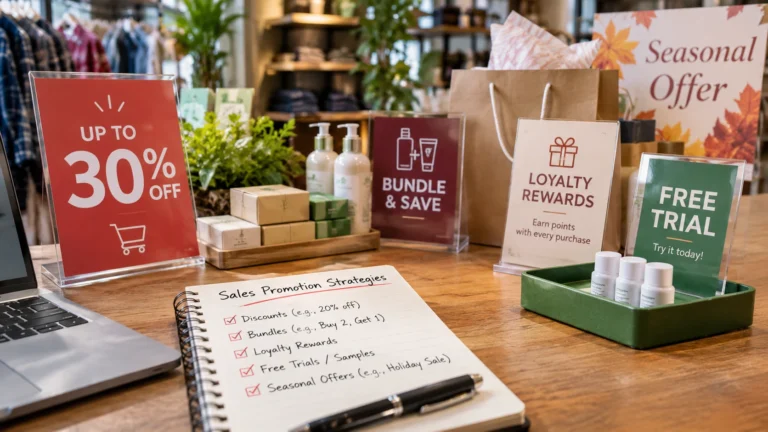
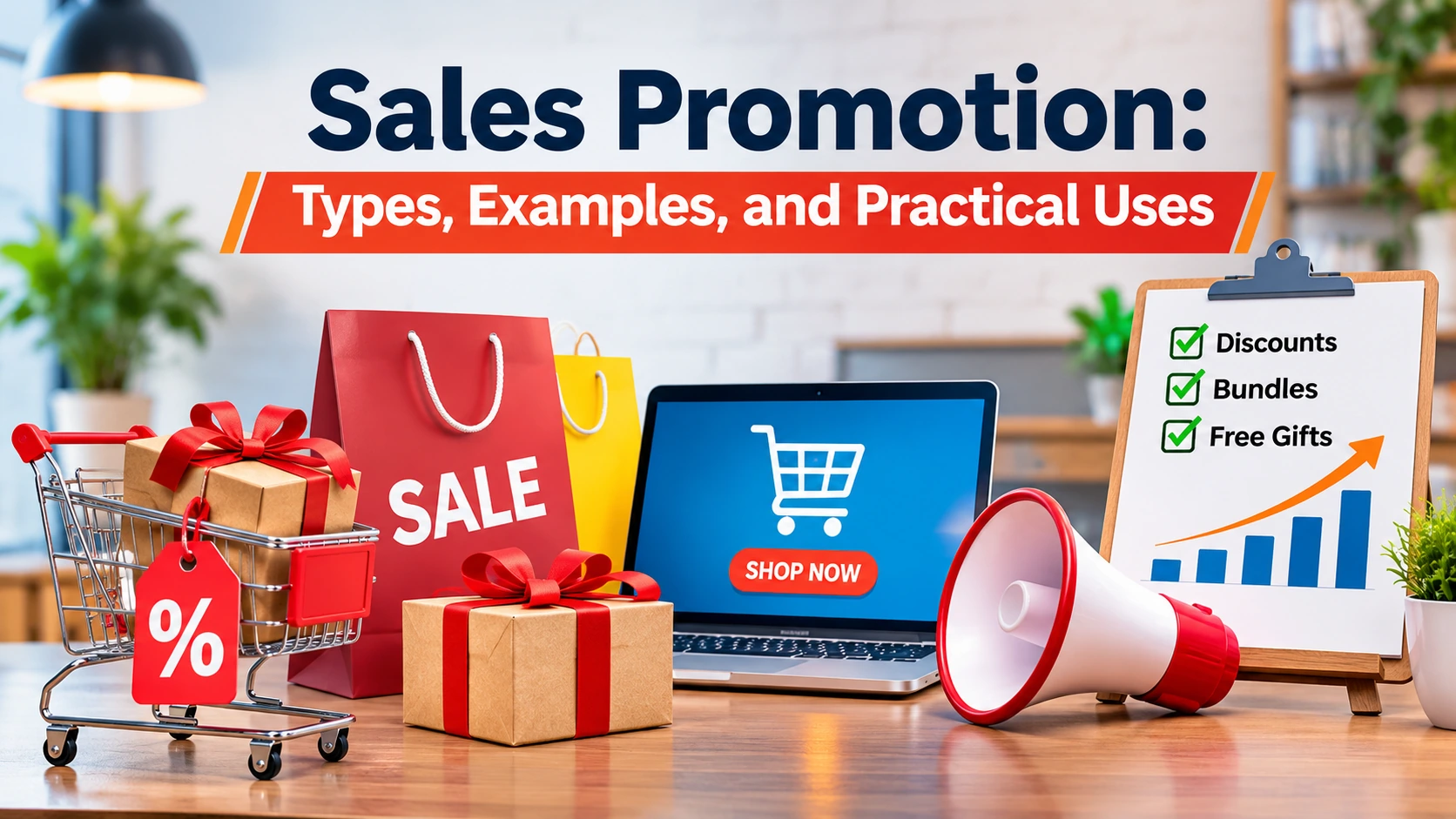
Sales promotion uses incentives, usually for a limited period, to encourage purchases or other sales-related actions. Common methods include coupons, samples, bundles, cashback, and gifts. Businesses can direct these offers at consumers, business customers, or trade partners, depending on the behavior they want to encourage.
What Is Sales Promotion?
A promotion gives someone an additional reason to act. The product still needs to meet their needs, but an incentive can make the decision easier or more timely. Consider a skincare retailer introducing a new moisturizer. Customers may hesitate because they haven’t tried its texture. A sample helps them evaluate it before purchasing. Price reductions are only one option. A useful accessory, trial pack, or delivery offer can also provide an incentive.
Business Queensland describes these activities as tools to stimulate demand and encourage purchases. It also places them within a broader marketing program. That context matters: an offer needs suitable products, clear communication, and reliable fulfillment. I’d start with the customer’s hesitation. If uncertainty is the obstacle, a sample may help more than another discount.
Objectives of Sales Promotion
The objective should describe a behavior you want to change. “Sell more” leaves too many decisions unanswered. A coffee roaster launching a decaf blend might want existing customers to try it. Adding a small sample to regular orders directly supports that goal. Other objectives include:
- Encouraging first purchases: Give new customers a manageable incentive to try your business.
- Increasing basket size: Offer a relevant bundle or spending threshold.
- Moving selected inventory: Promote seasonal or slow-moving products.
- Supporting repeat purchases: Provide a reward customers can use on a later visit.
- Improving distribution: Encourage retailers to stock or display a product.
Choose one primary objective. It makes evaluation easier. For example, a furniture retailer clearing discontinued chairs should track those units and their contribution to profit. Total website traffic would tell only part of the story.
Types of Sales Promotion
The main distinction is who receives the incentive. Consumer promotions influence the buyer’s purchase decision. Trade promotions encourage intermediaries to stock, display, or sell products. Businesses may also offer incentives to their sales teams, although those require separate attention to targets and conduct.
Consumer promotions
These offers reach end customers. Coupons, samples, cashback, and gifts with purchase belong here. A UK stationery shop might include a notebook with qualifying purchases during a back-to-school campaign. The additional item provides value without reducing every product’s price.
Trade promotions
These incentives target distributors, wholesalers, or retailers. Examples include temporary purchasing allowances, display support, and introductory stock offers. A food manufacturer could provide a retailer with an agreed allowance for featuring a new cereal. The immediate aim is better availability or visibility.
Sales team incentives
An employer might reward staff for achieving a defined sales objective. Targets should reflect appropriate selling behavior, returns, and customer outcomes. For instance, a software provider could recognize completed customer onboarding alongside sales. Rewarding contract volume alone may overlook whether customers receive an appropriate solution.
Sales Promotion Techniques
Different methods address different barriers. Before selecting one, consider what customers value, what the offer costs, and whether your operations can support it. A bakery selling perishable stock faces different constraints from an online retailer shipping durable goods.
| Technique | How it works | Main consideration |
| Discount coupon | Reduces the price of an eligible purchase | Margin loss and code sharing |
| Product sample | Lets customers try a small quantity | Sampling and fulfilment costs |
| Product bundle | Combines related items in one offer | Whether customers want the combination |
| Gift with purchase | Adds an item to a qualifying order | Gift usefulness and availability |
| Cashback | Returns money after a qualifying purchase | Clear conditions and claim process |
| Spending threshold | Adds a benefit above a specified basket value | Cost of providing the benefit |
| Repeat-visit reward | Encourages a subsequent purchase | Redemption and repeat profitability |
Buy-one-get-one offers can suit products customers use regularly. However, they can also bring purchases forward, leaving customers with less reason to return soon. Bundles need a sensible connection. Pairing a camera with a compatible memory card serves a clearer purpose than adding an unrelated clearance item. I’d compare the full cost of two possible incentives before choosing. A small gift might cost less than a percentage discount while still being useful to the customer.
Examples of Sales Promotion
The following scenarios are hypothetical. They illustrate how businesses might connect an incentive with a practical objective.
1. A bakery encourages quieter-hour visits
A Manchester bakery offers a pastry with selected coffee purchases between 2 p.m. and 4 p.m. on weekdays. The objective is afternoon demand. The owner tracks qualifying orders, ingredient costs, and whether regular full-price purchases shift into the offer.
2. A pet retailer introduces a new product
A US pet shop distributes small samples of a new grooming product with eligible orders. The retailer measures subsequent purchases using a product-specific code. Customers also receive usage instructions, helping them assess whether it suits their needs.
3. An online clothing store moves seasonal stock
A clothing retailer offers a bundle of selected summer accessories before its autumn collection arrives. The campaign applies to named items. That keeps the offer focused on inventory needing attention.
4. A wholesaler encourages initial stocking
A drinks wholesaler offers independent cafés an introductory allowance on their first case of a new beverage. Reorders matter here. An initial stock purchase alone doesn’t show that café customers want the product.
Sales Promotion vs Advertising
Advertising communicates a message through paid placements. A promotion supplies an incentive to act. Personal selling involves direct interaction with a potential buyer. They can work together. A furniture shop might advertise a weekend bundle, while staff explain which table and chair combinations qualify.
| Approach | Main function | Furniture shop example |
| Advertising | Communicate an offer or product message | A paid local search advertisement |
| Sales promotion | Provide an incentive | A temporary dining-set bundle |
| Personal selling | Explain suitability and answer questions | A staff member discusses dimensions |
The distinction helps you diagnose problems. If shoppers don’t know an offer exists, communication may need attention. If they understand it but find little value, increasing advertising won’t necessarily fix the incentive.
Sales Promotion Advantages and Disadvantages
A well-matched incentive can reduce hesitation, encourage product trial, or help move selected inventory. It can also let businesses test responses to different offers. There are costs.
Frequent discounts may encourage some customers to wait for another offer. Extra orders can strain stock, delivery, or service capacity. Existing customers might also claim incentives intended to attract new buyers.
Imagine a salon offering discounted appointments on Saturdays, when it already operates near capacity. The promotion could reduce revenue from bookings that would have happened anyway. A weekday offer may better match the business problem. I’d judge the benefit against what would probably have happened without the campaign. Busy staff and higher order counts aren’t sufficient evidence of success.
How to Plan a Promotion and Measure Results
Begin with the objective, then define the audience and eligible products. Set the offer’s dates, exclusions, redemption process, and budget before communicating it. Customers should understand what qualifies without contacting support.
A US running shop planning a gift with selected footwear needs enough gifts, accurate stock information, and staff instructions. An attractive offer becomes frustrating if fulfillment fails. Next, estimate the economics. Include product costs, discounts, gifts, payment fees, additional advertising, and other relevant expenses.
Consider this simplified illustration:
| Measure | Without offer | During offer |
| Units sold | 100 | 140 |
| Selling price per unit | $50 | $40 |
| Product cost per unit | $30 | $30 |
| Revenue | $5,000 | $5,600 |
| Revenue minus product costs | $2,000 | $1,400 |
Revenue rises by $600, but the amount remaining after product costs falls by $600. Additional campaign expenses would reduce it further. These are illustrative figures. They exclude other operating costs and don’t represent net profit.
Track measures that match your goal:
- Product trial: Sample recipients who subsequently purchase.
- Inventory clearance: Eligible units sold and remaining stock.
- Customer acquisition: New buyers and acquisition costs.
- Repeat purchases: Return visits and contribution from subsequent orders.
- Trade adoption: Initial stocking followed by reorders.
Use a comparison period carefully. Seasonality, advertising changes, and availability can affect results. I’d also check the weeks after the offer ends. A temporary spike followed by weaker demand may indicate that customers purchased earlier.
Frequently Asked Questions
What is the main purpose of a promotional offer?
Its main purpose is to encourage a specific action, such as trying a product, purchasing sooner, or placing another order. The chosen incentive should support a defined business objective.
Are all promotions based on discounts?
No, businesses can use samples, relevant gifts, bundles, and other incentives without directly reducing an item’s price. Each option still has a cost that needs to be assessed.
What is the difference between consumer and trade promotions?
Consumer promotions target end buyers, while trade promotions target intermediaries such as wholesalers and retailers. A customer coupon and a retailer stocking allowance serve different audiences.
How long should an offer last?
An offer should last long enough for its intended audience to respond within the campaign’s budget and stock limits. No universal duration fits every product or buying cycle.
Can promotions increase sales but reduce profit?
Yes, discounts and campaign costs can outweigh the contribution from additional orders. Evaluate the money remaining after relevant costs, alongside sales volume and subsequent customer behavior.
Final Thoughts
An effective incentive starts with a clear problem. A sample can address uncertainty, a relevant bundle can support a larger purchase, and a targeted allowance can encourage initial stocking.
Keep the offer understandable. Check costs before launch, prepare fulfillment, and measure outcomes against your objective. For a retailer clearing seasonal stock, success means moving the intended products on acceptable terms. The strongest result is an offer that serves customers while making economic sense for the business.