What Must an Entrepreneur Assume When Starting a Business?
Starting a business means making decisions before you have complete information. Anyone learning how to become an entrepreneur should understand that risk, uncertainty, responsibility, and changing conditions are part of the process. However, that doesn’t mean you should treat every belief about the business as true. Assumptions about customers, pricing, demand, costs, marketing, and profitability need evidence. Identifying and testing these assumptions early can help entrepreneurs make better decisions before committing significant time, money, or resources.
An entrepreneur should assume that some risk and uncertainty are unavoidable when starting a business. Plans may change, revenue may take time, and unexpected problems can appear. However, treat assumptions about customer demand, pricing, startup costs, marketing effectiveness, and profitability as hypotheses rather than facts.
What Must an Entrepreneur Assume When Starting a Business?
An entrepreneur must assume that the business will operate under uncertainty. No one can know exactly how customers, competitors, costs, suppliers, or market conditions will behave after launch.
They should also assume that some original ideas will need to change. A business plan can provide direction, but new information may show that the product, price, target customer, marketing channel, or operating model needs adjustment. Entrepreneurs should not assume their predictions are automatically correct. A strong business decision separates unavoidable uncertainty from testable assumptions.
In simple terms:
- Accept that risk exists.
- Expect plans to evolve.
- Take responsibility for decisions.
- Prepare for financial uncertainty.
- Test customer and market assumptions.
- Adjust when evidence contradicts the original plan.
Assume That Risk and Uncertainty Are Part of Business
You can’t completely remove risk from entrepreneurship. Starting a business requires decisions about money, customers, operations, and strategy without knowing exactly what will happen next.
Financial Uncertainty
Sales may be lower than expected while expenses may be higher. Customers may take longer to buy, equipment may require repairs, marketing may cost more than planned, or payments may arrive later than expected. This is why entrepreneurs should think beyond startup expenses. Working capital and cash flow matter because a business can experience financial pressure even when customers are buying.
Market Uncertainty
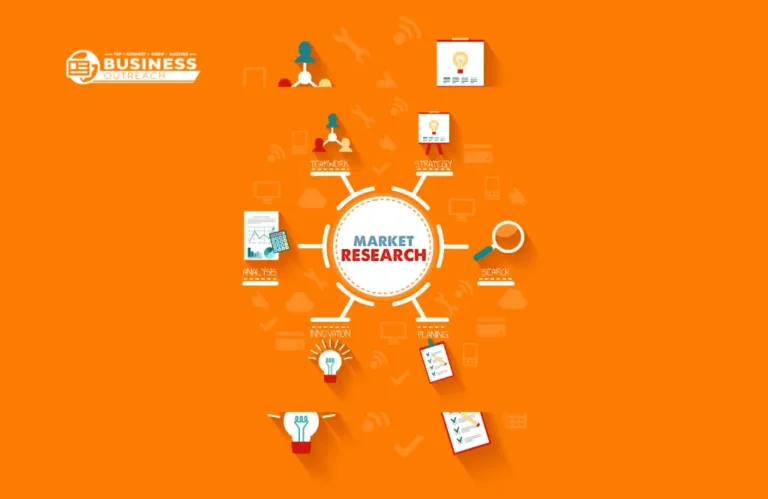
Customer preferences and competitive conditions can change. A product that looks attractive during planning may receive a weaker response after launch, while a customer segment the founder initially ignored may show stronger demand. Market research reduces uncertainty, but it cannot eliminate it.
Operational Uncertainty
Suppliers can experience delays. Employees may leave. Technology can fail. Production may take longer than expected. These possibilities do not mean the business should not launch. They mean operating plans should include some flexibility. Accepting risk differs from ignoring it. A responsible entrepreneur identifies important risks, reduces unnecessary exposure, and prepares alternatives where practical.
Assume Your Original Plan Will Change
A business plan is useful because it forces an entrepreneur to think about customers, competitors, costs, pricing, operations, and financial expectations. However, don’t treat the first version as permanent.
Real customers may respond differently from what research suggested. One marketing channel may perform poorly while another produces better inquiries. Suppliers may increase prices. Competitors may change their offers. Operational limitations may make part of the original model inefficient. The entrepreneur should therefore assume that adjustment will be necessary.
Changing a plan because new evidence has appeared is not automatically a sign of failure. In many cases, it is simply better decision-making. The important question is whether the change is based on evidence or panic. Entrepreneurs should avoid changing direction after every small problem, but they should also avoid protecting an idea that repeated evidence shows is not working.
Business Assumptions Entrepreneurs Should Test
Some uncertainty must be accepted, but important business assumptions can and should be tested before they become expensive mistakes.
1. Do Customers Really Have the Problem?
The first assumption is that the target customer genuinely experiences the problem the business intends to solve. Founders sometimes notice a problem personally and assume many other people feel the same way. That may be true, but you need to validate it.
Talk to potential customers and investigate how they currently deal with the problem. Pay attention to their behavior, not only their opinions. A problem becomes more commercially meaningful when people are already spending time, effort, or money trying to solve it.
2. Do Customers Actually Want Your Solution?
A real problem does not automatically mean customers want your particular solution. People may prefer an existing alternative. They may value convenience more than extra features. They may solve the problem differently than the entrepreneur expected.
A useful test is to present a simple version of the proposed offer and observe what potential customers actually do. Strong interest should gradually lead to actions such as inquiries, sign-ups, trials, preorders, or purchases.
3. Will Customers Pay Your Price?
Positive feedback is not the same as willingness to pay.
Someone may say a product sounds useful but reject it once a price is attached. This is why you should test pricing rather than choose it entirely from personal judgment.
Entrepreneurs can compare competitor pricing, talk to target customers, run paid pilots, offer preorders, or test different packages. The goal is to understand whether customers value the solution enough to pay a price that can support the business.
4. Is the Market Large Enough?
A product can solve a genuine problem and still struggle commercially if the reachable market is too small. Entrepreneurs should distinguish between everyone who could benefit and the customers the business can realistically reach, serve, and convert.
Consider where those customers are, how frequently they experience the problem, what alternatives they use, how competitive the market is, and how difficult they are to acquire. A broad market estimate sounds attractive, but a reachable customer segment is more useful for early planning.
5. Are Your Startup Costs Realistic?
Startup budgets are built from assumptions. Entrepreneurs estimate equipment, technology, inventory, rent, staff, professional services, marketing, insurance, and other expenses before many of the final costs are known.
The first estimate should therefore include some room for changes and unexpected costs. Request actual quotations where possible, rather than relying entirely on rough online estimates. Separate one-time startup expenses from monthly operating costs and calculate how much cash the business may need before revenue becomes predictable.
6. Will Your Marketing Actually Bring Customers?
Choosing a marketing channel doesn’t prove it will work. A founder may assume social media, paid advertising, SEO, cold outreach, partnerships, or referrals will generate customers. Until the channel produces measurable results, that remains an assumption. Test marketing on a manageable scale. Measure whether the channel produces qualified inquiries, trials, appointments, or purchases rather than concentrating only on impressions or followers. The key issue is not simply whether marketing generates attention. It is whether the business can acquire customers at a cost it can reasonably support.
7. Can the Business Deliver Consistently?
Customer demand is only one side of the business model. The company must also be able to fulfill what it sells. Consider staffing, supplier reliability, production capacity, delivery time, customer support, quality control, technology, and other operational requirements.
A service business may attract customers faster than its team can serve them. A product business may experience inventory shortages. A software company may discover that supporting customers requires more resources than expected. Testing operations on a smaller scale can reveal these problems before rapid growth makes them more expensive.
8. Can the Business Model Eventually Make Money?
Revenue and profit are not the same. A business can generate sales while still losing money because product costs, labor, marketing, fulfillment, rent, software, payment fees, or other expenses consume revenue.
Entrepreneurs should test assumptions about price, gross margin, customer acquisition, repeat purchases, fixed costs, and cash flow. The goal is not to predict future profit perfectly. It is to determine whether the basic economics can support a sustainable business.
Assumption vs. Evidence: What Counts as Validation?
Evidence does not remove every business risk, but it can improve decision quality.
| Business Belief | Weak Assumption | Stronger Evidence |
| Customers want the product. | People say the idea sounds useful. | Customers buy, preorder, or actively use it. |
| Pricing works | The founder thinks the price is reasonable. | Target customers actually pay the proposed price. |
| A market exists. | Many people could benefit. | Reachable customers demonstrate real demand. |
| Marketing will work. | The channel has a large audience. | It generates qualified customers at a workable cost. |
| The business can make money. | Revenue projections look attractive. | Sales can cover delivery, acquisition, and operating costs. |
Entrepreneurs should look for evidence that reflects real behavior whenever possible. A compliment is weaker than an inquiry, an inquiry is weaker than a preorder, and a preorder is usually weaker than a repeated purchase. The stronger the evidence, the more confidently an entrepreneur can make the next investment decision.
Practical Example of Testing Business Assumptions
Imagine an entrepreneur wants to launch an online meal-planning service for busy professionals at $20 per month. The founder initially assumes that busy professionals struggle with meal planning, prefer a digital solution, are willing to pay $20, can be reached through social media, and will remain subscribed long enough for the business to make money. Instead of building an expensive platform immediately, the entrepreneur could begin with customer interviews. If the problem appears genuine, a simple landing page could test interest.
The next stage might involve a manually delivered paid pilot. Customers could receive personalized meal plans without the founder first investing in complex software. That experiment can answer several questions. Are people willing to pay? Which features matter? How much work does each customer require? Do subscribers continue using the service? The entrepreneur can then improve the idea, change the price, target a different customer group, or decide not to proceed before making a much larger investment.
Common Unrealistic Assumptions New Entrepreneurs Make
Several assumptions regularly create problems when they are accepted without enough evidence.
Everyone Is a Potential Customer
Trying to serve everyone usually makes positioning, marketing, and product decisions less clear. A defined customer group is easier to understand and reach.
A Good Product Will Sell Itself
Even a useful product needs distribution. Customers must discover it, understand its value, trust the business, and have a reason to purchase.
Friends Liking the Idea Proves Demand
Friends and family can provide feedback, but they may not represent the target market or behave like paying customers.
Customers Will Accept the Proposed Price
Pricing must reflect both customer value and business economics. The founder’s preferred price does not determine what the market will accept.
Revenue Will Grow Immediately
New businesses often need time to build awareness, improve their offer, learn which customers convert, and create repeatable sales processes.
Competitors Can Be Ignored
Competition provides useful information about customer expectations, pricing, positioning, and available alternatives.
The Founder Can Do Everything Alone
Handling every function personally may work briefly, but it can become a bottleneck as workload increases.
The Original Plan Will Stay Correct
Markets provide new information. Entrepreneurs should expect to revise assumptions as evidence changes.
How to Reduce Uncertainty Before Starting a Business
Entrepreneurs cannot eliminate uncertainty, but they can make it more manageable.
Talk to Target Customers
Speak with people who actually match the intended customer profile. Ask about their current behavior, problems, alternatives, and purchasing decisions rather than simply asking whether they like the idea.
Test the Smallest Useful Version
A full product is not always necessary for validation. Depending on the business, a pilot, prototype, preorder, sample service, landing page, or manual version may provide useful evidence.
Test the Riskiest Assumptions First
Not every assumption deserves equal attention. Identify the beliefs that would seriously damage the business if they were wrong. If the model works only when customers pay a premium price, test willingness to pay early.
Use Conservative Financial Estimates
Build projections using realistic costs and avoid depending entirely on best-case sales. Consider what happens if revenue arrives more slowly than expected.
Commit Resources Gradually
Where practical, make larger investments after important assumptions have gained stronger evidence. This reduces the amount of money exposed to an untested idea.
Review Assumptions Regularly
An assumption that was reasonable six months ago may become inaccurate after competitors, costs, customer behavior, or technology change. Validation should continue after launch.
What Should an Entrepreneur Accept but Not Assume?
An entrepreneur should accept:
- Uncertainty
- Responsibility
- The need to adapt
- Continuous learning
- Possible setbacks
- Changing market conditions
An entrepreneur should not unthinkingly assume:
- Customers will buy
- The proposed price will work.
- Marketing will perform as expected.
- Startup costs will remain unchanged.
- Revenue will grow quickly.
- Competitors will not respond.
- The business will automatically become profitable.
This distinction is important because entrepreneurship requires confidence without treating confidence as evidence.
Frequently Asked Questions
What is the main thing an entrepreneur must assume when starting a business?
An entrepreneur should assume that risk and uncertainty are unavoidable. However, entrepreneurs should still test specific beliefs about customers, pricing, costs, demand, and profitability before treating them as facts.
What business assumptions should entrepreneurs test first?
Start with assumptions about the customer problem, demand, willingness to pay, pricing, startup costs, customer acquisition, and whether the business model can eventually make money.
Should an entrepreneur assume customers will buy?
No. Validate customer interest with stronger evidence such as inquiries, trials, preorders, purchases, or repeat usage whenever possible.
Should an entrepreneur expect immediate profit?
No. Early revenue and profitability are uncertain. New businesses may need time to acquire customers, improve operations, refine pricing, and build repeatable sales processes.
Why is market validation important?
Market validation helps entrepreneurs determine whether a real customer problem exists, whether people want the proposed solution, and whether demand is strong enough to justify further investment.
How can entrepreneurs reduce startup risk?
Entrepreneurs can reduce risk through market research, customer interviews, small experiments, conservative budgeting, staged investment, operational testing, and maintaining enough financial flexibility to respond when assumptions change.
Is risk unavoidable in entrepreneurship?
Yes. Starting and operating a business always involves some uncertainty. The objective is not to remove every risk but to understand important risks, reduce unnecessary exposure, and make decisions using the strongest evidence available.
Final Thoughts
When starting a business, entrepreneurs must assume uncertainty, responsibility, and change are unavoidable. They should never assume that customers, pricing, demand, marketing, costs, or profitability will automatically behave as predicted. Treat important business beliefs as hypotheses. Test them with customer behavior, realistic financial estimates, small experiments, and operational evidence before making large commitments.