How to Start a Vending Machine Business: Complete Guide
Starting a vending business involves more than buying a machine and filling it with snacks. If you want to understand how to start a vending machine business, focus first on location quality, customer demand, startup costs, product selection, and operating expenses. You also need a reliable system for payments, restocking, maintenance, and performance tracking. A machine can generate sales and still be a poor investment if the location or underlying economics do not work.
Starting a vending machine business involves selecting a suitable market, identifying and validating locations, developing a business plan, estimating startup costs, verifying local requirements, securing location agreements, choosing machines, stocking appropriate products, and managing pricing, payments, maintenance, and inventory. Start by understanding the economics of each location before investing heavily in additional machines.
How to Write a Vending Machine Business Plan
A vending machine business plan should explain how each machine will attract customers, generate revenue, and cover its operating costs. Start with your target customer and intended location. An office, gym, warehouse, hotel, or apartment building can produce very different buying patterns. Define which products you plan to sell and what type of machine each requires.
Your plan should also estimate machine costs, initial inventory, payment fees, location rent or commission, transport, maintenance, insurance where relevant, and working capital. Consider an operator planning a snack-and-drink machine for an office. Before purchasing equipment, they estimate the number of potential users, nearby food alternatives, working days, location terms, expected product demand, and restocking requirements. Revenue projections should remain assumptions. Use actual sales later to test whether the original plan was realistic.
How Much Does It Cost to Start a Vending Machine Business?
There is no single amount required to start because the setup can vary considerably. Someone buying one used machine may need much less capital than an operator purchasing several new cashless machines. Location agreements, delivery, equipment condition, inventory, and maintenance needs also affect the budget.
Initial costs can include:
- Machine purchase or lease
- Delivery and installation
- Card or contactless payment hardware
- Initial inventory
- Business registration
- Applicable licences or permits
Ongoing expenses may include products, location commissions, payment processing, travel, repairs, storage, insurance, and working capital. I’d treat maintenance and operating cash as part of the startup budget rather than an expense to worry about after the machine is installed. The machine price is only one part of the investment.
How to Start a Vending Machine Business Step by Step
1. Choose What Your Vending Machine Will Sell
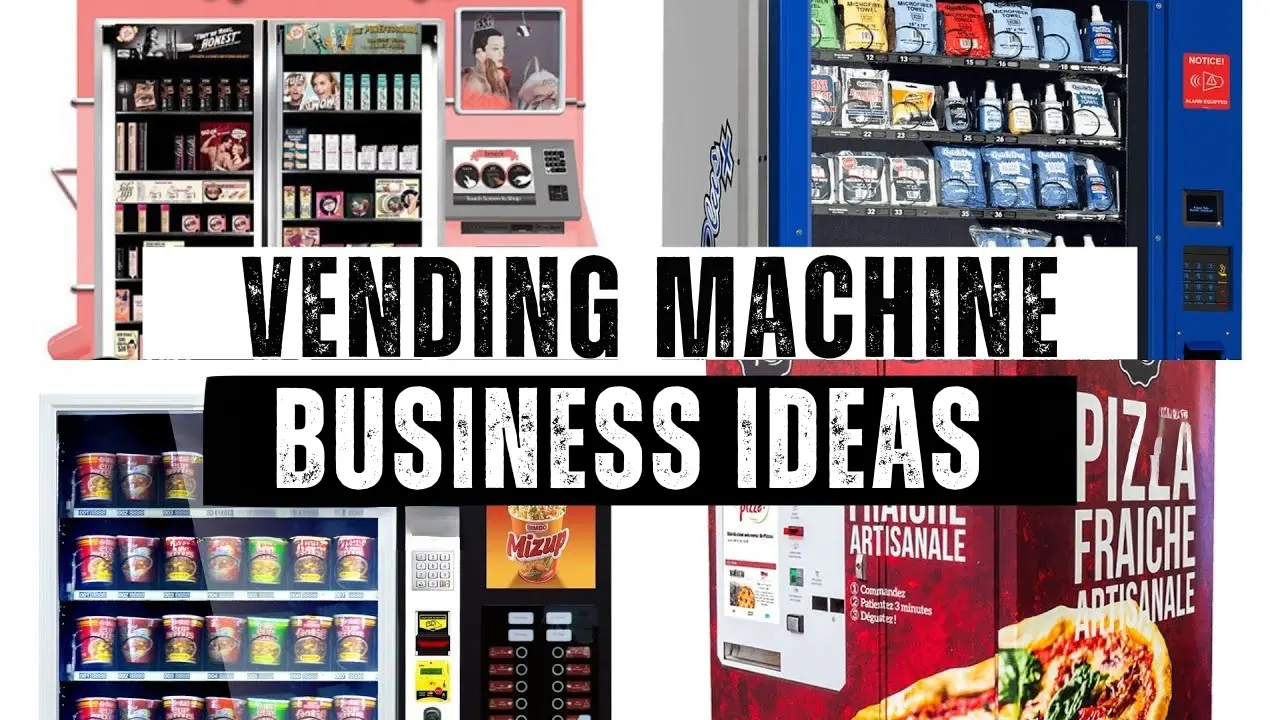
Decide what type of products fit the customers you intend to serve. Common options include snacks, cold drinks, coffee, combination machines, healthier foods, and everyday convenience products. More specialised machines can also work where there is clear demand.
The location should influence this decision. A gym may have greater demand for water, sports drinks, and convenient snacks. An office could support a broader mix of drinks, confectionery, and workplace snacks.
Avoid selecting products only because you personally like them. Customer behaviour should shape the product mix. Your choice also affects machine specifications, storage, shelf life, restocking frequency, and maintenance needs.
2. Research Demand Before Buying a Machine
Buying equipment before finding a credible location can create unnecessary pressure to accept whatever placement becomes available. Instead, evaluate potential locations first.
Look at who uses the site, how often they visit, how long they stay, and what convenient alternatives are nearby. Security, operating hours, electricity access, and restocking access also matter. Foot traffic deserves context. A busy entrance where people quickly pass through could perform differently from a smaller workplace where the same employees remain for several hours each day.
From a planning perspective, I’d value repeat access to suitable customers more than raw foot traffic alone. The goal is not to find the busiest building. It is about finding a location where the machine meets a genuine convenience need.
3. Register the Business and Check Local Requirements
Once the model begins to look viable, set up the business in accordance with the rules that apply where you operate. Requirements can vary by country, state, region, local authority, machine location, and the types of products being sold. Food and beverage vending may also create requirements that do not apply to machines selling nonfood products. US operators should check applicable federal, state, and local business, tax, food, and vending requirements.
UK operators should separately check relevant business, tax, food safety, and local authority requirements. Do not assume a checklist written for another jurisdiction applies to your operation. Keep business finances separate as well. A dedicated account and organised records make it much easier to understand what each machine actually earns and costs.
4. Secure a Written Location Agreement
You need permission from the person or organisation authorised to approve the machine’s placement. A written agreement can make expectations clearer for both sides.
It may address where the machine will stand, who provides electricity, when you can restock it, and whether the location receives rent or a percentage of sales. Contract duration, machine removal, damage responsibilities, and termination conditions can also matter.
Location commission deserves special attention. A site with strong sales may look attractive, but a high commission can change the final economics. Some locations may use a fixed rent, while others negotiate a different arrangement. Do the calculation before agreeing to terms. A good location relationship also depends on reliability. Empty shelves, dirty equipment, repeated faults, or slow service can affect whether the property owner wants to keep your machine.
5. Choose the Right Machine and Payment Setup
The right machine should match the products, location, expected demand, and available budget. A new machine usually requires more capital but may offer newer components, warranties, and integrated payment technology. Used equipment can reduce the purchase price, though condition and repair history become more important. Buying and leasing also have different financial implications.
Do not judge a used machine by price alone. Check its physical condition, refrigeration where relevant, parts availability, payment compatibility, and maintenance history. Payment options deserve similar consideration. Cash can still be practical in some settings. Card, contactless, or mobile payments may make purchasing more convenient for customers, but payment hardware and processing can create additional costs. Choose the setup based on customer behaviour and the location’s economics.
New vs Used Vending Machines
Neither option is automatically better. Available capital, equipment condition, location needs, and maintenance risk should guide the decision.
| Factor | New Machine | Used Machine |
| Purchase cost | Usually higher | Usually lower |
| Equipment condition | New | Can vary significantly |
| Warranty | More likely | May be limited or unavailable |
| Repair uncertainty | Lower initially | Potentially higher |
| Cashless technology | Often available | May require an upgrade |
| Initial capital requirement | Higher | Lower |
| Maintenance history | Not relevant yet | Should be checked carefully |
A used machine can preserve cash for inventory and operations. However, that advantage weakens if frequent repairs create downtime.
6. Choose Products and Set Prices
Your initial product selection is an educated estimate. Sales data should eventually determine what remains in the machine. Consider customer demand, wholesale cost, selling price, shelf life, package size, and how frequently the machine will be serviced. Location costs matter too. If the property owner receives commission and card payments create processing charges, those expenses should be considered when pricing products.
Do not confuse a popular product with a profitable product. An item can sell frequently but still contribute little after product cost and other expenses. Monitor slow inventory as closely as best sellers. Products that rarely move occupy space that could be used for something customers prefer. Food products also create expiry and spoilage considerations. Adjust gradually using actual purchasing behaviour.
7. Build a Restocking and Maintenance Routine
A vending operation may sell without an employee standing beside the machine, but the business still requires regular work. You need to monitor stock, clean equipment, rotate products, check expiry dates, refill popular items, and respond to faults.
Maintenance should be planned financially. A jammed product, a failed card reader, a refrigeration problem, or another mechanical issue can stop sales until it is resolved. Downtime can also frustrate customers and the location owner.
Keep records of common faults and repair expenses. If one machine requires repeated service, its low purchase price may no longer represent good value. Restocking schedules should also follow demand. Visiting a slow machine too frequently wastes travel time, while leaving a busy machine empty results in lost potential sales.
8. Track Each Machine Before You Expand
Revenue should be measured at the individual machine level whenever practical.
Track:
- Product sales
- Inventory costs
- Location commission
- Payment charges
- Travel and restocking
- Spoilage
- Repairs
- Downtime
A vending route can look healthy overall while one or two machines consistently perform poorly. One approach I’d avoid is adding machines simply because the existing route produces revenue. First, understand which locations create worthwhile returns and which ones consume time and capital.
This information also tells you what to look for in future sites. Expansion works better when you can replicate the characteristics of successful locations rather than buying machines first and hoping suitable locations will appear later.
Best Locations for Vending Machines: What Matters Most?
Potential locations can include offices, warehouses, gyms, hotels, apartment buildings, medical facilities, educational sites where permitted, and industrial workplaces. No category guarantees strong sales.
A useful location combines enough potential customers with a convenient reason to purchase. Consider dwell time, customer type, operating hours, security, nearby alternatives, and access for restocking.
Product fit matters as much. A smaller warehouse with regular employees and few nearby food options might offer a stronger opportunity than a larger building surrounded by cafés and shops. You should also consider how the location fits your route. A machine that performs reasonably well but requires a long, separate journey may be less attractive than a similar machine near existing stops. Location quality is both a sales question and an operational question.
Examples of Vending Machine Business Setups
Office Snack and Drink Machine
An operator secures permission to place a combination machine inside an office with repeat weekday users. Instead of filling every slot based on assumptions, they begin with a varied selection and track sales. Slow products are gradually replaced, while popular items receive more space. The operator also monitors commission, card fees, inventory costs, and refill frequency rather than evaluating performance from revenue alone.
Gym Vending Machine
A gym machine serves a different audience. The operator tests bottled water, drinks, and convenient snacks that better match customer needs. They review what sells and avoid assuming that products performing well in an office will produce the same results here. Product demand determines future inventory decisions.
Small Multi-Location Vending Route
An operator begins with several machines located reasonably close together. Before expanding further, they compare each machine’s sales, travel requirements, maintenance, and restocking frequency.
One distant machine may produce good sales but require disproportionate travel. The operator can then decide whether its performance justifies keeping it or whether a location closer to the route would improve route efficiency.
Common Vending Machine Business Mistakes
Buying a machine before securing a credible location is one of the easiest ways to create unnecessary risk. You may end up accepting a weak location simply because equipment is already sitting unused. Another mistake is treating foot traffic as guaranteed demand. People need a reason to purchase, and available alternatives can change their behaviour.
Poor inventory decisions also reduce performance. Products should be monitored by sales, margin, and shelf life rather than personal preference. Operators can also underestimate location commissions, payment fees, transport, maintenance, and spoilage. Those costs matter when deciding whether a machine actually performs well. A weak location should not remain indefinitely just because moving the machine is inconvenient. If sensible changes to products and pricing yield little improvement, relocation may be worth considering.
How to Grow a Vending Machine Business
Growth should follow proven unit economics. Before adding another machine, review the existing locations. Understand their sales patterns, product costs, commission, maintenance, travel time, and restocking workload. Route density becomes increasingly important as the number of machines grows. Five locations within a manageable area can be easier to service than five machines spread across long distances, even if individual sales appear similar.
Additional machines also require more inventory and capital. Maintenance problems can occur simultaneously, so reserves become more important. A compact route of financially sound machines can be stronger than a larger route built around weak locations. Expansion should therefore focus on what works rather than simply increasing the number of machines you own. If you are comparing vending with other low-overhead opportunities, 12 Unique Business Ideas can also help you explore alternative business models before deciding where to invest your time and capital.
Frequently Asked Questions
How Much Does It Cost to Start a Vending Machine Business?
There is no single startup amount because machine type, condition, payment system, inventory, delivery, location terms, maintenance, and working capital affect the investment. Build the budget around your specific machine and proposed location rather than relying on one universal figure.
Can You Start a Vending Machine Business With One Machine?
Yes, you can start a vending machine business with one machine if you have a suitable location, permission to place it there, sufficient operating capital, and a workable product and pricing model. Starting small can also make the economics easier to understand before expansion.
Where Is the Best Place to Put a Vending Machine?
The best location is one with suitable customer demand, convenient access, reasonable operating terms, and enough potential purchases to support the machine’s costs. Foot traffic, dwell time, nearby alternatives, security, and product fit should all be considered.
Do You Need Permission to Place a Vending Machine?
Yes, you should obtain permission from the property owner or authorised operator before installing a vending machine on their premises. A written agreement can also clarify placement, access, electricity, commissions, responsibilities, and termination terms.
Is a Vending Machine Business Profitable?
A vending machine business can be profitable, but profitability depends on location, product costs, pricing, commissions, payment fees, travel, maintenance, spoilage, and downtime. High sales alone do not prove that a machine is financially worthwhile.
How Often Should Vending Machines Be Restocked?
Restocking frequency depends on sales volume, machine capacity, product shelf life, and customer demand. A busy machine may require frequent visits, while slower locations can be serviced less often without leaving popular products unavailable.
Final Thoughts
Starting a vending machine business is less about collecting machines and more about building locations that work financially. Secure promising sites, understand each machine’s complete costs, stock products customers actually buy, and create reliable systems for restocking and maintenance. Track every location before expanding. Once you know which customer groups, products, machines, and routes produce sustainable results, adding more locations becomes a measured business decision rather than a guess.