How to Become an Entrepreneur: A Practical Step-by-Step Guide for 2026
Most people searching for how to become an entrepreneur don’t have a clarity problem. They have a starting problem. The idea is there, the desire is real, but the gap between wanting to build something and actually doing it feels enormous when you’re looking at it from the outside.
Becoming an entrepreneur starts with identifying a real problem worth solving, building the skills and mindset to execute it, and taking deliberate steps from idea to launch without waiting for perfect conditions. Most successful entrepreneurs don’t start with money or connections. They start with clarity and a willingness to move before they feel ready.
What Is an Entrepreneur, and What Do They Actually Do?
An entrepreneur identifies a problem or opportunity in the market and builds a business around solving it. If you are wondering, what does an entrepreneur do? The role typically involves turning that opportunity into a functioning business through planning, decision-making, problem-solving, and execution. The reality is messier, more demanding, and honestly more interesting than any textbook version.
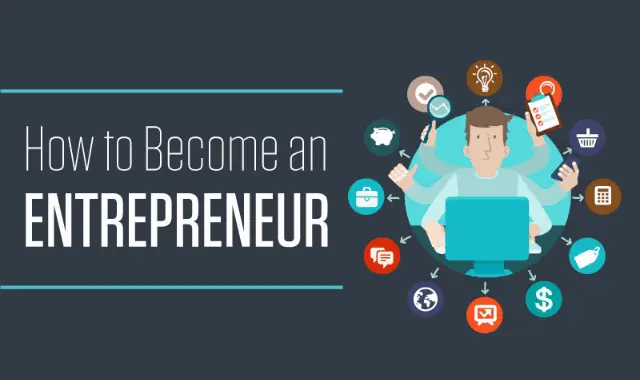
On a practical level, entrepreneurs wear more hats than almost any other professional. On any given day, a founder might close a sales call, review cash flow, hire a contractor, rewrite a product page, and handle a customer complaint before lunch. The role demands breadth in a way that most careers don’t, and that breadth is both the challenge and the appeal.
What separates an entrepreneur from someone who is simply self-employed is the orientation toward growth and value creation. A freelancer trades time for money. An entrepreneur builds systems, teams, and products that can eventually generate value beyond their direct involvement. That distinction matters when you’re deciding what kind of business you actually want to build.
Understanding this early saves you from building the wrong thing. Plenty of talented people set out to become entrepreneurs and end up creating high-paying jobs for themselves instead. Studying established founders can also provide useful perspective; for example, exploring who is the most famous female entrepreneur shows how ownership, leadership, and long-term value creation can shape an entrepreneurial career. Neither path is wrong, but they require different decisions from day one.
The Entrepreneurial Mindset Comes Before Anything Else
In my experience, the biggest difference between people who successfully become entrepreneurs and those who stay permanently in the planning phase isn’t skill, money, or connections. It’s mindset. Specifically, it’s how someone relates to uncertainty, failure, and the discomfort of not knowing how something will turn out.
What must an entrepreneur assume when starting a business? At a minimum, they should expect uncertainty, changing conditions, and the possibility that some early assumptions will prove wrong. This matters more than any tactic you’ll read about. You can copy someone else’s business model, follow their exact launch sequence, and use identical tools. But if your relationship with risk and failure is fundamentally different from theirs, you’ll get different results from the same actions.
Risk Tolerance and Resilience
Entrepreneurship carries real risk across financial, professional, and personal dimensions. Understanding that risk clearly before you start is not pessimism. It’s preparation. The entrepreneurs who last are not the ones who pretend risk doesn’t exist. They’re the ones who understand it well enough to manage it deliberately.
Resilience in entrepreneurship doesn’t mean bouncing back quickly from setbacks. It means continuing to make good decisions under pressure, even when things aren’t working. A first-time founder who loses three clients and adjusts their offer is being resilient. One who loses three clients and quits is not. The difference is rarely talent. It’s usually the expectations they brought in.
Growth Mindset and Adaptability
A growth mindset means treating every failure, customer complaint, and dead end as data, not a verdict. I’ve seen founders turn their worst product launches into their most valuable learning experiences, not because they were optimistic, but because they stayed curious about what went wrong instead of defensive about it.
Adaptability is the practical expression of that mindset. Markets shift, customers change their minds, competitors move, and the strategy that made sense in January sometimes needs rebuilding by March. Entrepreneurs who hold too tightly to their original plan often outpace themselves into irrelevance. The ones who stay loose enough to pivot without losing direction tend to survive longer and build better.
Entrepreneur Versus Employee Thinking
The shift from employee to entrepreneur thinking is one of the most underestimated transitions in business. As an employee, your job is to execute tasks within a defined structure. As an entrepreneur, your job is to create the structure, decide which tasks matter, and execute them at the same time.
Employees are rewarded for consistency and following the process. Entrepreneurs are rewarded for outcomes and building a process where none exists. That difference in orientation affects how you spend your time, how you measure success, and how you respond when nobody is telling you what to do next.
Essential Skills Every Entrepreneur Needs
You don’t need to be an expert in everything before you start. But a handful of skills make the difference between a business that survives its first two years and one that doesn’t. Building these before or alongside your business gives you a serious advantage.
Business and Financial Literacy
Understanding your numbers is non-negotiable as an entrepreneur. You don’t need an accounting degree, but you do need to understand cash flow, profit margins, burn rate, and the difference between revenue and profit. A founder who doesn’t know their numbers is flying blind, and most businesses that fail in the first three years fail for financial reasons rather than product reasons.
Start with the basics. Learn to read a simple profit and loss statement, understand what your break-even point looks like, and know at all times how much runway you have. A bakery owner running $15,000 in monthly revenue who doesn’t know her ingredient and labor costs has no idea whether she’s building a business or funding a hobby.
Sales and Communication
Every entrepreneur sells, whether they’re selling to customers, pitching to investors, recruiting their first employee, or convincing a supplier to give them better terms. Sales is not a personality type. It’s a learnable skill built on listening, asking the right questions, and connecting what you offer to what someone genuinely needs.
Communication goes beyond sales. How you write an email, run a meeting, give feedback, or explain your product to a stranger shapes every relationship your business depends on. Founders who communicate clearly tend to hire better, retain customers longer, and build stronger partnerships than those who don’t.
Problem Solving and Decision Making
Entrepreneurship is a continuous series of problems to solve with incomplete information. The ability to break a complex problem into components, identify what you actually know versus what you’re assuming, and make a decision without waiting for certainty is one of the most valuable skills a founder can develop.
One mistake I keep seeing is founders who mistake research for action. At some point, more information stops reducing uncertainty and starts delaying necessary decisions. Recognizing that point and moving anyway separates operators from perpetual planners.
Leadership and Time Management
As your business grows, your ability to lead others becomes as important as your ability to execute yourself. Leadership for entrepreneurs is less about authority and more about clarity. A practical management guide ewmagwork approach, can also help founders organize responsibilities, workflows, communication, and accountability as their teams expand. Being clear on the direction, communicating it consistently, and creating an environment where capable people want to do their best work matters more than any title.
Time management for entrepreneurs is a different beast than for employees. No one imposes structure from the outside. Every hour you spend is a choice, and the wrong choices compound quickly. Learning to protect your highest-leverage time early, before demands on your attention multiply, is a habit worth building from day one.
How to Become an Entrepreneur Step by Step
The path from idea to operating business follows a rough sequence. It’s not always linear, and different businesses move through it at different speeds, but skipping steps almost always costs more time than it saves.
Anyone figuring out how to become an entrepreneur will find dozens of frameworks online with different step counts and terminology. The underlying logic stays the same across all of them. You validate demand, plan lightly, start small, launch something real, and then improve based on what you learn.
Step 1: Find and Validate a Real Problem
The most expensive mistake first-time entrepreneurs make is building something before they know anyone will pay for it. Validation means confirming demand before you invest significant time or money. Real validation happens when someone is willing to pay for your solution, not just say it sounds interesting.
Start by identifying problems you understand well, ideally from your own experience or professional background. A former HR manager who spent years watching companies struggle with onboarding is better positioned to build an onboarding tool than someone who read about the problem in a blog post. Domain knowledge reduces your research time and increases your credibility with early customers.
Talk to at least ten to twenty potential customers before building anything. Ask what the problem is costing them, how they’re currently solving it, and what an ideal solution would look like. If nobody is currently spending money on the problem in any form, that’s a signal worth taking seriously before you commit.
Watch for the difference between polite interest and real demand. People will tell you an idea sounds great because they don’t want to discourage you. A dog groomer who says she’d “definitely use” a booking app is giving you nothing. The same groomer who asks when it launches and whether she can pay for early access is giving you actual validation. Ask for commitment, not opinions.
Step 2: Build a Lean Business Plan
A business plan doesn’t need to be a fifty-page document. For an early-stage entrepreneur, it needs to answer a handful of critical questions clearly. Who is your customer? What problem do you solve for them? How do you reach them? What does it cost to deliver your product, and what will you charge? How long until the business covers its own expenses?
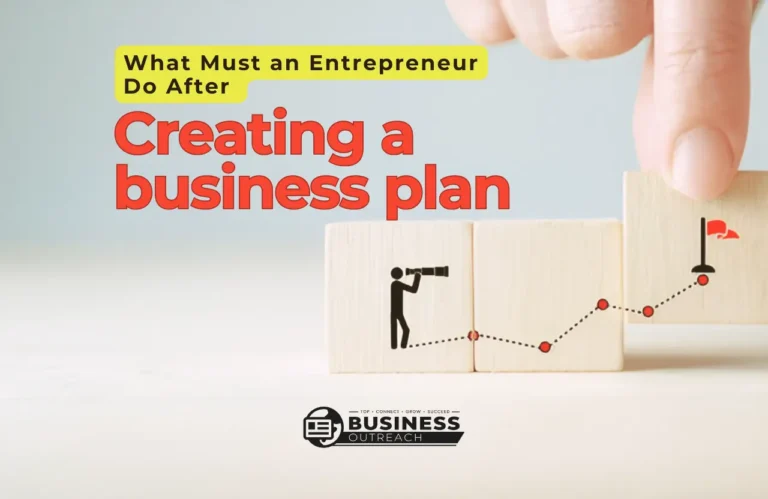
What must an entrepreneur do after creating a business plan? The next step is to turn the plan into action by testing its assumptions, validating demand, and working toward the first real customers. A lean business plan is a thinking tool, not a funding document. It makes your assumptions visible so you can test them against reality.
Keep it short, keep it honest, and update it regularly. A plan that reflects current reality is useful. One that reflects what you hoped would be true six months ago is a liability.
Step 3: Start Small and Bootstrap First
The instinct to raise money before proving anything is one of the most common traps in early entrepreneurship. A startup booted fundraising strategy can help founders stay disciplined early, validate demand, and consider outside capital only when it has a clear purpose. Most successful businesses start with far less capital than founders assume they need. A consulting business can start with a laptop and a phone. A product business can start with a small batch order and a basic website. A service business can start with one paying client.
One way for an entrepreneur to decrease risk is a reliable answer most founders learn too late. Starting lean and bootstrapping before seeking outside capital keeps your decisions grounded. When you’re spending your own money, you move faster, waste less, and stay closer to what customers actually want rather than what your pitch deck promised.
Bootstrap as long as you can. Use revenue to fund growth wherever possible. Bring in outside capital only when you have proof of demand and a clear plan for what the capital will do that organic growth can’t.
Step 4: Launch Your MVP and Get First Customers
An MVP, or minimum viable product, is the simplest version of your offer that delivers real value to a real customer. It is not a prototype, a demo, or a half-built product. It is something a paying customer can use and benefit from today, even if it lacks the features you plan to add later.
Getting your first customers is the hardest and most important milestone in any new business. Your first customers teach you more about your product, your market, and your own assumptions than any amount of research. They tell you what’s actually valuable, what’s confusing, what’s missing, and what they’d recommend to someone else, if you’re willing to ask and listen honestly.
Don’t wait until you feel ready to launch. Launch when you have something genuinely useful, then improve based on what you learn from real usage. A software company that launches with five solid features and listens to its first hundred users will build a better product than one that spends a year building thirty features nobody asked for.
Step 5: Learn, Adapt, and Scale
Entrepreneurs who build lasting businesses aren’t the ones with the best original idea. They’re the ones who iterate fastest based on real feedback, adjust their strategy without abandoning their direction, and build systems that let the business grow beyond what any one person can personally deliver.
Scaling is not just about revenue. It’s about building the processes, team, and infrastructure that allow consistent delivery as demand grows. A restaurant that makes great food but can’t replicate the experience when the founder isn’t in the kitchen hasn’t built a scalable business. It’s built a personal performance.
Learn to delegate earlier than feels comfortable. Build documentation and systems as you go, not after things break. Hire for your weaknesses before you hire for your strengths. Looking at who is the most famous tech entrepreneur can also provide useful examples of how leading founders moved beyond doing everything themselves and built teams with stronger expertise in specific areas.
This is where most people who learn how to become an entrepreneur hit their real ceiling. Doing everything yourself works at $5,000 a month in revenue. It breaks completely at $50,000. Founders who cross that threshold usually started documenting processes and hiring help while it still felt premature.
Common Mistakes New Entrepreneurs Make
The first and most damaging mistake is optimizing for the wrong things early. New entrepreneurs often spend months building a perfect website, designing a logo, or registering trademarks before they have a single paying customer. None of those things matter until someone has paid you for what you do. Revenue is the only validation that counts.
Underestimating how long things take is another pattern I’ve watched destroy otherwise solid businesses. The average small business takes one to two years to reach consistent profitability. Founders who expect results in three months and plan their finances accordingly run out of runway before they reach the point where the business actually works.
Going alone for too long is the third mistake that compounds silently. Entrepreneurship is isolating by nature. Decisions fall on you, pressure accumulates, and there’s rarely anyone to tell you honestly when you’re off track. Finding a mentor, joining a founder community, or building a small accountability group with other entrepreneurs at your stage can improve the quality of your decisions and speed up your learning.
Pricing too low is a mistake that’s harder to reverse than most founders expect—new entrepreneurs often price based on what feels comfortable rather than what the value justifies. A freelance designer charging $30 an hour because she’s nervous about charging more will attract clients who treat her like a commodity. Raising prices later means rebuilding your entire client base, which is far harder than pricing correctly from the start.
Ignoring marketing until the product is finished creates a different kind of problem. Founders who spend six months building in isolation, then launch to an audience of zero, discover that having a great product and having customers are separate challenges. Building an audience while you build the product gives you both a launch channel and a feedback loop that improves what you’re making.
Choosing What Kind of Business to Build
Not every entrepreneurial path looks the same, and the type of business you choose shapes everything from your daily routine to how much capital you need upfront. Resources such as the famparentlife entrepreneurial parent infoguide from famousparenting can also be useful for founders who need to consider how business choices fit alongside family responsibilities and limited time. Service businesses start fastest and cheapest. You sell your expertise, get paid, and grow by adding clients or raising rates.
Product businesses take longer to reach revenue but scale differently. Once you’ve built something people want, additional sales don’t require proportionally more of your time. The tradeoff is a longer runway before your first dollar and more upfront capital.
Digital businesses sit somewhere between the two. A course creator, software founder, or content business invests heavily upfront in building something, then sells it repeatedly at near-zero marginal cost. These models have the highest ceiling but also the highest failure rate, because building something nobody wants can take months before you find out.
Pick the model that matches your resources, risk tolerance, and timeline. A single parent with limited savings should start with services and build toward products later. Someone with two years of runway and technical skills can afford to build first.
Frequently Asked Questions
Can anyone become an entrepreneur?
Anyone willing to learn, tolerate uncertainty, and take consistent action can become an entrepreneur. No specific degree, prior experience, or large starting capital is required.
How much money do you need to start?
It depends on the model. Service businesses can start with almost nothing, while product businesses usually need upfront capital for inventory or development.
What is the hardest part of becoming an entrepreneur?
For most first-time founders, the hardest part is the psychological weight of uncertainty. Practical challenges are learnable, but staying focused without external structure takes real discipline.
How long does it take to become a successful entrepreneur?
Most businesses take two to four years to reach stable profitability. The timeline depends on your market, experience, and how fast you find paying customers.
What is the difference between an entrepreneur and a business owner?
A business owner runs an existing operation, while an entrepreneur builds something designed to scale beyond their direct involvement. Business owners optimize for stability; entrepreneurs optimize for growth.