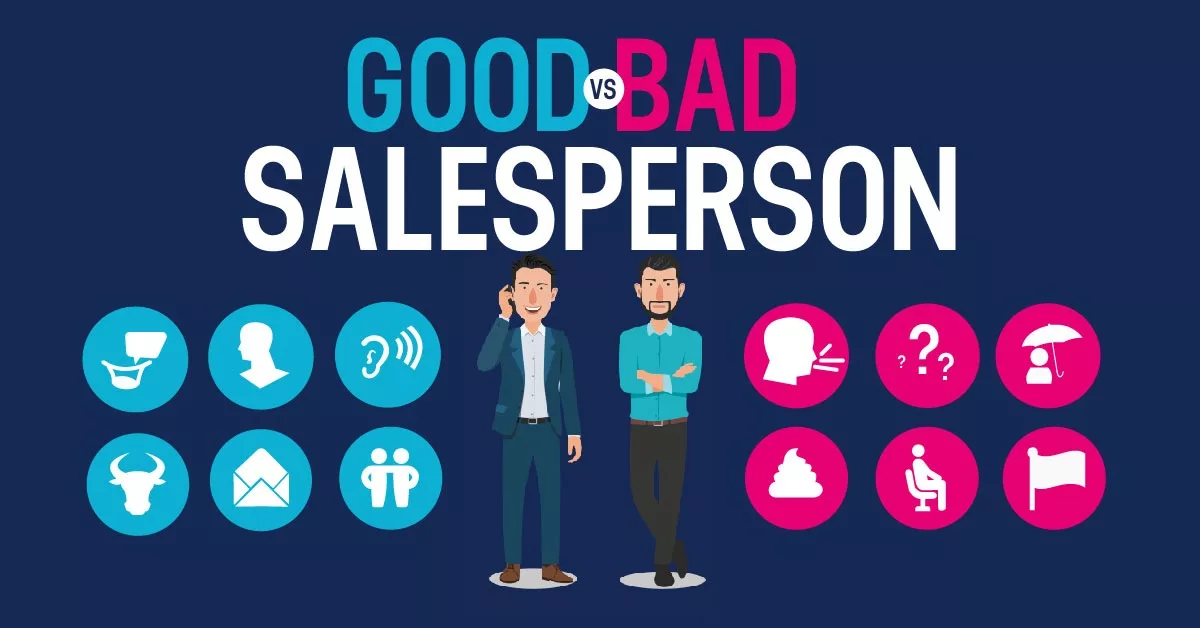
Good Salesperson vs Great Salesperson: Key Differences
A good salesperson can explain an offer, handle common objections, and move opportunities through the pipeline. A great salesperson does those things too, but with deeper customer understanding and stronger discipline. The difference is rarely charm, confidence, or natural talent alone. It appears in how someone prepares, listens, qualifies prospects, follows up, and learns from results. This matters in both B2B and B2C sales because steady performance depends on repeatable behaviour, not occasional wins.
A good salesperson communicates value and produces reliable results. A great salesperson goes further by understanding the customer’s real problem, adapting the conversation, building trust, and reviewing performance continuously. The main difference is the quality and consistency of the behaviours behind each sale.
Good Salesperson vs Great Salesperson: Quick Comparison
A great salesperson connects competent sales tasks into a repeatable process that improves customer fit and sales quality.
| Comparison area | Good salesperson | Great salesperson |
| Main focus | Closing the current opportunity | Solving the right customer problem |
| Preparation | Reviews the offer and basic details | Researches the buyer and likely needs |
| Communication | Explains clearly | Listens, questions, and adapts |
| Objections | Gives a prepared answer | Finds the concern behind the objection |
| Follow up | Contacts the prospect when required | Uses a useful, consistent process |
| Feedback | Accepts advice | Actively requests specific feedback |
| Lost deals | Moves to the next lead | Reviews why the opportunity was lost |
| Performance | Produces good results | Produces repeatable results |
A software representative may deliver a polished demo. A great one first asks where delays happen and who will use the system, then shows only relevant functions.
What Is a Good Salesperson?
A good salesperson is competent and reliable. They understand the offer, communicate value, and complete basic follow-up.
Core Qualities of a Good Salesperson
Good salesperson qualities include clear communication, product knowledge, persistence, confidence, and basic objection handling.
Consider a home insurance representative in Manchester. A good salesperson can explain coverage, exclusions, and payment options without confusing the customer. The buyer receives accurate information and knows what to do next.
Why Being Good Is Still Valuable
“Good” does not mean weak. A good salesperson may meet targets, retain customers, and support a healthy pipeline. Some remain at this level because their current approach works often enough, so they rarely examine why certain calls succeed while others fail.
What Can Keep a Good Salesperson from Improving?
Progress often slows when someone relies on scripts, uses the same pitch with every buyer, or confuses activity with effectiveness. A recruitment salesperson might make fifty calls daily but still build a weak pipeline through poor qualification.
What Makes a Great Salesperson?
A great salesperson combines skill with judgement and improves the quality of each buying conversation.
Great Salespeople Understand Before They Recommend
Strong discovery comes before recommendation. Great salespeople ask about the customer’s situation, desired outcome, urgency, risks, and decision process. If the pitch begins before the problem is clear, the conversation is probably too seller-focused.
Great Salespeople Prepare for Each Conversation
Preparation includes researching the company, role, possible needs, and likely objections. A commercial property agent in New York, for example, should consider headcount, commute patterns, lease length, and future growth before suggesting offices.
Great Salespeople Create Consistent Processes
Great salespeople use clear qualification criteria, accurate notes, planned follow-ups, and defined next steps. The process stays consistent while the language changes for each buyer.
Great Salespeople Keep Improving
They review lost deals, repeated objections, and customer reactions. Strong learners also ask focused questions, such as, “Did I understand the business impact clearly?”
Difference Between a Good Salesperson vs Great Salesperson
1. Product Knowledge vs Customer Understanding
A good salesperson knows features, pricing, and common benefits. A great salesperson connects only the relevant parts of the offer to the customer’s situation.
An equipment representative may know every specification. The stronger seller first asks about production volume, downtime, maintenance, and safety requirements.
2. Talking Well vs Listening Strategically
Good salespeople present clearly. Great salespeople listen for meaning, hesitation, priorities, and missing information, then ask useful follow-up questions.
3. General Preparation vs Account Specific Preparation
A good salesperson prepares the presentation. A great salesperson prepares for the account. For a logistics company in Birmingham, that could mean reviewing delivery regions, seasonal demand, current carriers, and service complaints.
4. Answering Objections vs Diagnosing Objections
A good salesperson answers “the price is too high” with value or a discount. A great salesperson first checks what the objection means.
The buyer may lack budget, doubt the outcome, need approval, or compare alternatives. Each cause requires a different response.
5. Closing a Deal vs Creating Customer Value
Good salespeople aim to secure the order. Great salespeople also consider customer fit and realistic expectations.
A poor fit can create cancellations, complaints, and damaged trust. Ethical judgement protects long-term value, even when it means not forcing a sale.
6. Occasional Follow Up vs Disciplined Follow Up
A good salesperson remembers to contact the prospect. A great salesperson follows a plan and adds value each time.
Instead of sending “just checking in,” they may summarise the discussion, answer a question, or confirm the decision date.
7. Meeting Targets vs Understanding Performance Drivers
Good salespeople track revenue and closed deals. Great salespeople also review qualification quality, conversion stages, and reasons for lost opportunities. The useful question is which behaviour produced the result and whether it can be repeated.
8. Accepting Feedback vs Seeking Feedback
A good salesperson listens when a manager gives advice. A great salesperson asks for feedback before problems become obvious.
A car sales representative in Chicago might ask a manager to review two test drive conversations and identify where customer priorities were missed.
9. Building Rapport vs Building Trust
Rapport makes a conversation comfortable. Trust makes the buyer believe the salesperson is accurate, reliable, and honest. Trust grows through realistic claims, careful listening, and useful follow-up.
10. Recovering from Rejection vs Learning from Rejection
A good salesperson moves forward after hearing no. A great salesperson also reviews what the rejection can teach. Repeated losses may reveal weak qualification, unclear value, or missing decision-makers.
Examples of Good Salesperson vs Great Salesperson
Example 1: SaaS Account Executive
A good account executive gives a complete demo. A great one first learns that a ten-person support team loses hours transferring customer details between systems. The demo then focuses on workflow automation.
Example 2: Commercial Real Estate Agent
A good agent sends properties within budget. A great agent also checks employee access, parking, lease flexibility, expansion plans, and operating costs.
Example 3: Industrial Equipment Representative
A good representative explains price, output, and warranty. A great representative asks how often the current machine fails and what downtime costs before recommending a model.
Example 4: Recruitment Services Salesperson
A good salesperson presents recruitment packages. A great salesperson learns that the employer struggles to fill specialised engineering roles within sixty days, then discusses sourcing, screening, and communication speed.
Traits of Successful Salespeople
Curiosity and Active Listening
Curiosity produces better questions, while active listening reveals what has been tried, why the issue matters, and where the buyer hesitates.
Emotional Intelligence and Adaptability
Great salespeople notice tone, adjust their pace, and match the discussion to the buyer’s priorities.
Accountability, Resilience, and Ethics
They examine their own role in results, recover from rejection, and avoid hiding limitations or pushing unsuitable solutions.
How to Become a Great Salesperson
Assess Your Current Sales Behaviour
Review recent calls, follow-ups, and lost opportunities. Check whether you pitch too early, miss decision makers, avoid budget questions, or end meetings without a clear next step.
Improve Your Discovery Questions
Better questions reveal the gap between the customer’s current position and desired outcome.
Questions Worth Asking
Ask what is happening now, what the problem affects, what has been tried, who is involved, and how a decision will be made. The conversation should sound natural, not like an interrogation.
Practise Active Listening
Do not prepare your reply while the customer is speaking. Summarise important points and ask for clarification.
“So the main concern is implementation time, not price” can prevent the conversation from moving in the wrong direction.
Build a Better Follow Up Process
Every follow-up should have a purpose. Record the next action and date while the conversation is fresh. Useful messages confirm requirements or clarify what happens next.
Review Lost Deals and Seek Feedback
Separate controllable problems from external factors. A missing decision-maker may indicate weak qualification, while a late objection may indicate incomplete discovery.
Ask colleagues to review one skill at a time. Focused feedback is easier to apply than broad comments.
Measure Improvement Over Time
Revenue matters, but it is not the only signal. Watch whether qualification improves, fewer opportunities stall, and customer conversations become more relevant.
Common Sales Mistakes That Limit Improvement
Talking More Than the Prospect
Long explanations can hide weak discovery. Customers need enough space to describe the problem in their own words.
Pitching Before Understanding the Problem
An early pitch often sounds generic because it is based on assumptions. Diagnosis should come first.
Treating Every Lead as Equally Valuable
Poor qualification wastes time and weakens pipeline accuracy. Strong opportunities deserve different attention from leads with no need, authority, or realistic timing.
Discounting Too Quickly
A discount cannot fix poor fit or weak trust. Diagnose the concern before changing the offer.
Following Up Without Adding Value
Repeated reminders create noise. Each contact should move the decision forward or clarify what is blocking it.
Confusing Confidence with Competence
Confidence can improve delivery, but it cannot replace preparation, judgement, and customer understanding.
Good or Great Salesperson: Self Assessment Checklist
- Do you research prospects before important meetings?
- Do you ask questions before presenting?
- Can you explain the customer’s problem in their words?
- Do you confirm a clear next step?
- Does each follow-up add useful context?
- Do you review lost opportunities?
- Do you request specific coaching?
- Do you adapt by customer and situation?
- Can you identify where opportunities leave your pipeline?
- Will you advise against an unsuitable purchase?
A “no” does not mean you are a poor salesperson. It identifies a behaviour that can be improved.
Frequently Asked Questions
What Is the Main Difference Between a Good Salesperson vs Great Salesperson?
A good salesperson performs core sales tasks competently, while a great salesperson turns customer understanding, preparation, and improvement into a repeatable process. Greatness appears in consistent behaviour, not one impressive month.
What Makes a Great Salesperson Successful?
A great salesperson succeeds through strong discovery, active listening, careful qualification, useful follow-up, adaptability, and regular performance review. These habits improve sales quality and customer trust.
Can an Introvert Become a Great Salesperson?
Yes, an introvert can become a great salesperson because effective selling depends more on listening, preparation, curiosity, and communication than constant outgoing energy.
Is Closing More Deals the Only Sign of a Great Salesperson?
No, closing more deals is not the only sign of greatness. Customer fit, retention, trust, consistency, and ethical judgement also matter.
Can Sales Skills Be Learned?
Yes, sales skills can be learned through practice, feedback, observation, and review. Discovery, qualification, objection handling, and follow-up can all improve over time.
How Long Does It Take to Become a Great Salesperson?
There is no fixed timeline for becoming a great salesperson. Progress depends on role complexity, sales cycle length, practice quality, coaching, and willingness to change habits.
Final Thoughts
The difference between a good salesperson and a great salesperson is not a perfect script or a naturally persuasive personality. It is the ability to understand the customer more deeply, prepare with purpose, follow a process, and learn from each result. Good performance provides the foundation. Great performance develops when that foundation becomes more thoughtful, consistent, and customer-focused. Choose one behaviour, measure it honestly, and improve it before moving to the next.