12 Sales Promotion Ideas for Small Businesses to Try
Choosing an offer is easy when you only look at what competitors advertise. Making it useful for your customers takes more thought. A discount might attract attention, but a relevant bundle or convenient service upgrade could suit the situation better. The most useful sales promotion ideas give people a clear benefit while keeping your costs manageable. Whether you run a shop, an online business, or an appointment-based service, start with the customer action you want to encourage.
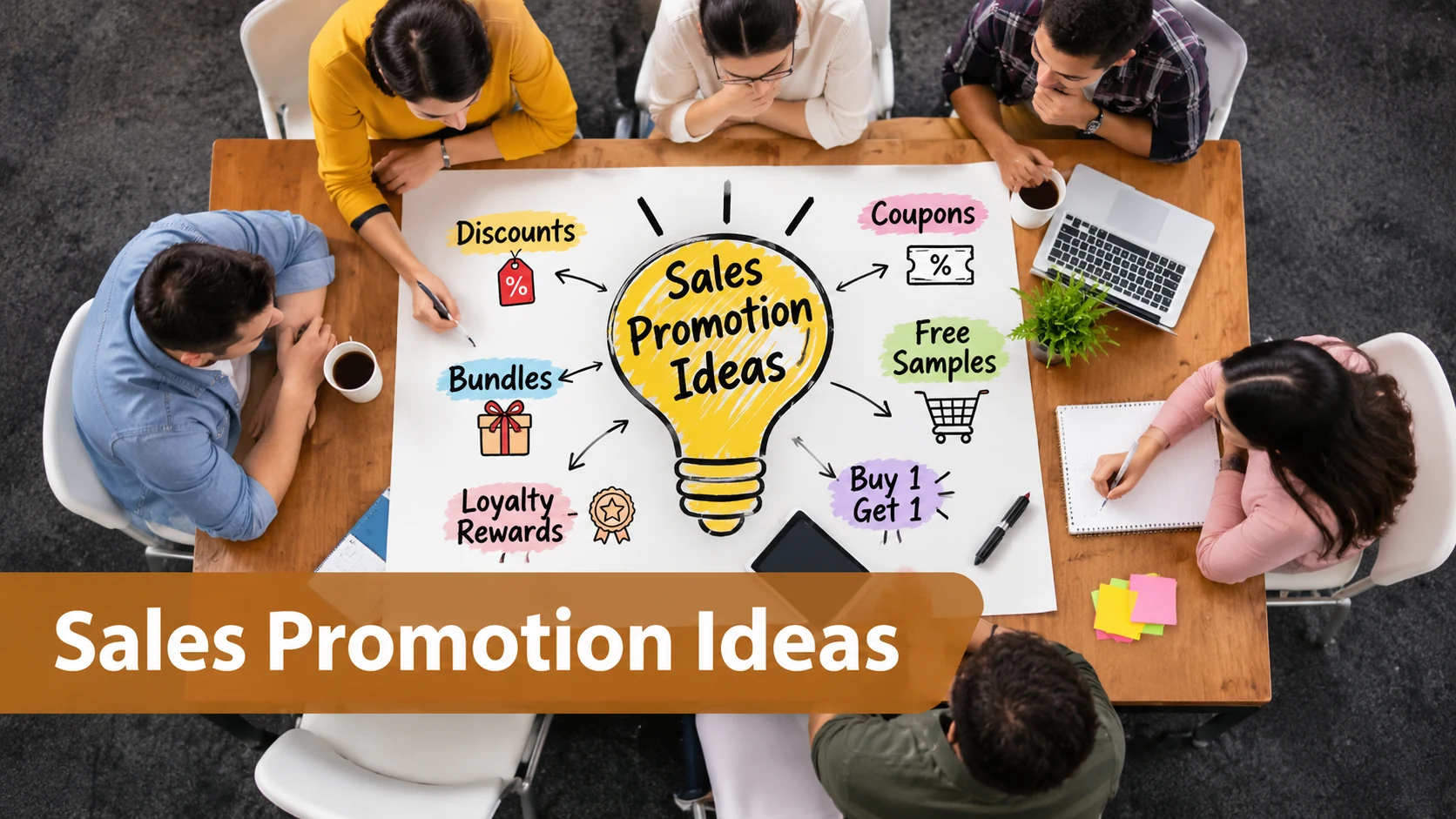
Sales promotion ideas are offers that give customers an incentive to purchase, try a product, or return. Examples include coupons, bundles, samples, referral rewards, and complimentary upgrades. Choosing an appropriate offer involves matching the incentive to customer needs, business capacity, and the cost of providing it.
Sales Promotion Ideas for Small Businesses
You don’t need to run every kind of promotion. Choose an offer that addresses a specific need, then check whether your team can deliver it consistently. For example, a florist clearing seasonal pots needs a different incentive from a tutor filling weekday sessions. The following ideas include hypothetical scenarios to show how each offer could work.
1. Offer a First-Purchase Coupon
Give new customers a clearly defined saving on their first eligible order. A minimum spend can help control the economics.
For example, an online stationery shop could offer $5 off a first order above $40. Explain exclusions before checkout. I’d check the remaining contribution after fulfillment costs before choosing the coupon amount.
2. Bundle Complementary Products
Combine items customers would reasonably use together. A bundle can simplify the buying decision while offering a package saving or added convenience.
A gardening shop might sell pots, compost, soil, and seeds as a starter set. Show what the bundle contains. Avoid presenting slow-moving extras as valuable additions when they don’t support the customer’s intended use.
3. Run a Buy One Get One Offer
Offer an additional eligible item free or at a reduced price when customers purchase another. This can suit products customers use regularly or can share.
A sock retailer could offer a second selected pair at half price. Make the eligible range obvious and explain which item receives the discount. Calculate costs across both products.
4. Include a Gift With Purchase
Add a relevant gift to qualifying purchases instead of reducing the main product’s price. The gift should have a clear connection to the order.
A luggage shop could include a luggage tag with selected suitcases. State any spending threshold and availability conditions. Gift stock, packing time, and delivery weight all affect the cost.
5. Let Customers Try a Free Sample
Samples give customers a way to judge an unfamiliar product before buying a larger quantity. They’re useful when taste, texture, or another product characteristic influences the decision.
A tea shop might include a small blend sample with an order. Add preparation instructions. Track subsequent purchases where practical rather than treating every distributed sample as a successful outcome.
6. Set a Free Delivery Threshold
Cover standard delivery when an eligible order reaches a stated value. This gives shoppers a defined benefit for placing a larger order.
For example, a homeware retailer might offer standard delivery above £60. I’d compare the threshold with typical basket values and delivery costs first. Explain location restrictions and whether bulky products are excluded.
7. Give a Next-Purchase Voucher
Provide a voucher after a completed purchase to encourage another visit. A clear redemption window helps customers understand when they can use it.
A pet supplies shop could issue a voucher for a future accessories order after a food purchase. Match the timing to a realistic return visit. Explain minimum spend requirements and excluded items.
8. Reward Completed Customer Referrals
Offer a reward when an existing customer refers someone who completes a qualifying purchase or booking.
A cleaning business might give a future booking credit after the referred household’s first paid clean. Define completion clearly. Consider cancellations, duplicate accounts, and reward limits before launch so staff can apply the offer consistently.
9. Offer a Loyalty Reward
Give customers a clear route to a reward through repeat purchases or visits. Keep the structure easy to understand.
A café might provide a qualifying drink after a stated number of eligible purchases. Explain which drinks count and whether rewards expire. Check that the system works reliably across staff shifts and ordering channels.
10. Create an Off-Peak Booking Offer
Make selected quieter appointments more attractive through a defined saving or added benefit. Limit the offer to periods where you actually have spare capacity.
A tutor could offer a reduced-price introductory session during available weekday hours. Avoid extending the incentive to already full periods. Additional bookings should fit your schedule without displacing better-value work.
11. Add a Complimentary Service Upgrade
Include a useful extra with an eligible booking. This can provide value without reducing the advertised price of the core service.
A car detailing business could include a fabric protection treatment with selected interior packages. This is a common tactic in high ticket sales, where small extras can reinforce a premium price point. My starting point would be the extra labor and materials required. Explain exactly what the upgrade includes.
12. Run a Seasonal Clearance Offer
Promoting selected seasonal stock when making space has a clear operational benefit. Keep the offer focused on the products you need to move.
A clothing retailer could discount remaining summer shirts before autumn deliveries arrive. Show genuine prices and accurate availability. Evaluate the contribution recovered alongside storage needs and the risk of unsold inventory.
Examples of Sales Promotion Ideas
A useful campaign connects the offer with a specific customer need. The following hypothetical examples show how that connection can shape eligibility, presentation, and measurement. They aren’t reported case studies, and no results are assumed. Each business would need to test the offer against its own costs and normal purchasing patterns.
US Bookshop: An independent bookshop creates a reading bundle containing a paperback, bookmark, and reading journal. Customers can see the individual prices and bundle price together. Staff track bundle purchases and contributions to assess whether the offer supports additional purchases.
UK Hair Salon: A salon includes a conditioning treatment with selected Tuesday appointments. Only genuinely available slots qualify. The owner tracks bookings, treatment costs, and appointment duration, checking whether the offer fills spare capacity or shifts existing appointments.
Online Pet Shop: A retailer issues a next-purchase voucher after a customer completes a first food order. The voucher applies to selected accessories. The team tracks redemption and the contribution from follow-up orders, including whether customers buy again without another incentive.
Sales Promotion Ideas Compared
Comparison helps narrow the choices before you build an offer. Start with the customer action you want, then examine the cost of encouraging it. A retailer seeking product trials may consider samples, while a service business with empty appointments may prefer an off-peak offer. Neither option is automatically suitable without checking the details.
| Idea | Suitable objective | Main cost | What to check |
|---|---|---|---|
| First-purchase coupon | Encourage an initial order. | Reduced purchase revenue | Contribution after fulfillment |
| Product bundle | Sell related items together. | Package saving and preparation | Relevance of every item |
| Free sample | Support product trial | Product and distribution | Follow-up purchases |
| Delivery threshold | Encourage a larger basket. | Delivery subsidy | Basket contribution and exclusions |
| Referral reward | Attract referred customers | Credit or reward | Completed qualifying transactions |
| Off-peak offer | Fill available appointments. | Incentive and staff time | Whether existing bookings shift |
How to Choose a Sales Promotion Idea
Start with a problem you can define. “Fill six available Wednesday appointments” gives you a clearer decision than “get more attention.” Once the goal is specific, shortlist offers that could address it without creating another problem. A dog grooming business, for instance, needs to consider appointment length as well as customer interest.
Check customer relevance first. A useful incentive should support something the customer already wants. An unrelated gift may add expense without strengthening the offer.
Calculate the full cost. Include discounts, materials, fulfillment, payment fees, and additional staff time where applicable. Low-cost sales promotion ideas still require a budget.
Set clear conditions. Specify eligible purchases, dates, minimum spend, and redemption limits. Customers should understand important restrictions before committing.
Test within your capacity. I’d start with one product group, customer segment, or booking period. Confirm that staff instructions and checkout settings work.
Measure the intended outcome. Track completed bookings, qualifying purchases, or repeat visits alongside contribution. A promotion that generates activity may still need adjusting if its costs absorb the benefit.
Frequently Asked Questions
What Are Some Low-Cost Sales Promotion Ideas?
Relevant bundles, controlled referral credits, and limited service upgrades can be relatively low-cost options when their direct costs are modest. Check your own margins and available capacity. An incentive that costs little for one business may be expensive for another.
Can You Run a Sales Promotion Without Discounts?
Yes, samples, gifts, complimentary upgrades, and loyalty rewards can provide an incentive without reducing the listed price. Each still has a cost. Choose an extra customer value and define exactly when it applies.
Which Sales Promotion Ideas Suit Service Businesses?
Off-peak booking offers, completed-referral rewards and useful service upgrades can suit appointment-based businesses. The right choice depends on staffing, delivery costs and spare capacity. A salon should check whether promotional bookings replace full-price appointments.
How Long Should a Promotional Offer Last?
An offer should run long enough for customers to act while remaining within your budget, stock, and operating capacity. There is no universal ideal duration. Set a genuine end date and avoid repeatedly extending a supposedly final deadline.
How Do You Know Whether a Promotion Worked?
A promotion worked when it achieved its defined objective at an acceptable cost compared with a reasonable baseline. Review contribution as well as sales or bookings. Where possible, check whether customers return and whether purchases simply moved forward.
Final Thoughts
Choose an offer you can explain clearly, deliver reliably, and measure against a specific goal. Customer value matters, but so do your costs and capacity. Start with one manageable test rather than several overlapping incentives. Once you understand who responded, what they purchased, and what remained after costs, you’ll have a stronger basis for deciding what to repeat or change.