Sales Promotion Strategies: Types, Examples, and Tips
A promotion can bring more orders and still leave your business with less profit. The offer might be too generous, reach customers who would have bought anyway, or move next month’s purchases into this week. That’s why effective sales promotion strategies begin with a business goal rather than a discount percentage. Whether you run an online store, a neighbourhood bakery or a service business, the task is similar: give customers a useful reason to act while keeping the offer financially workable.
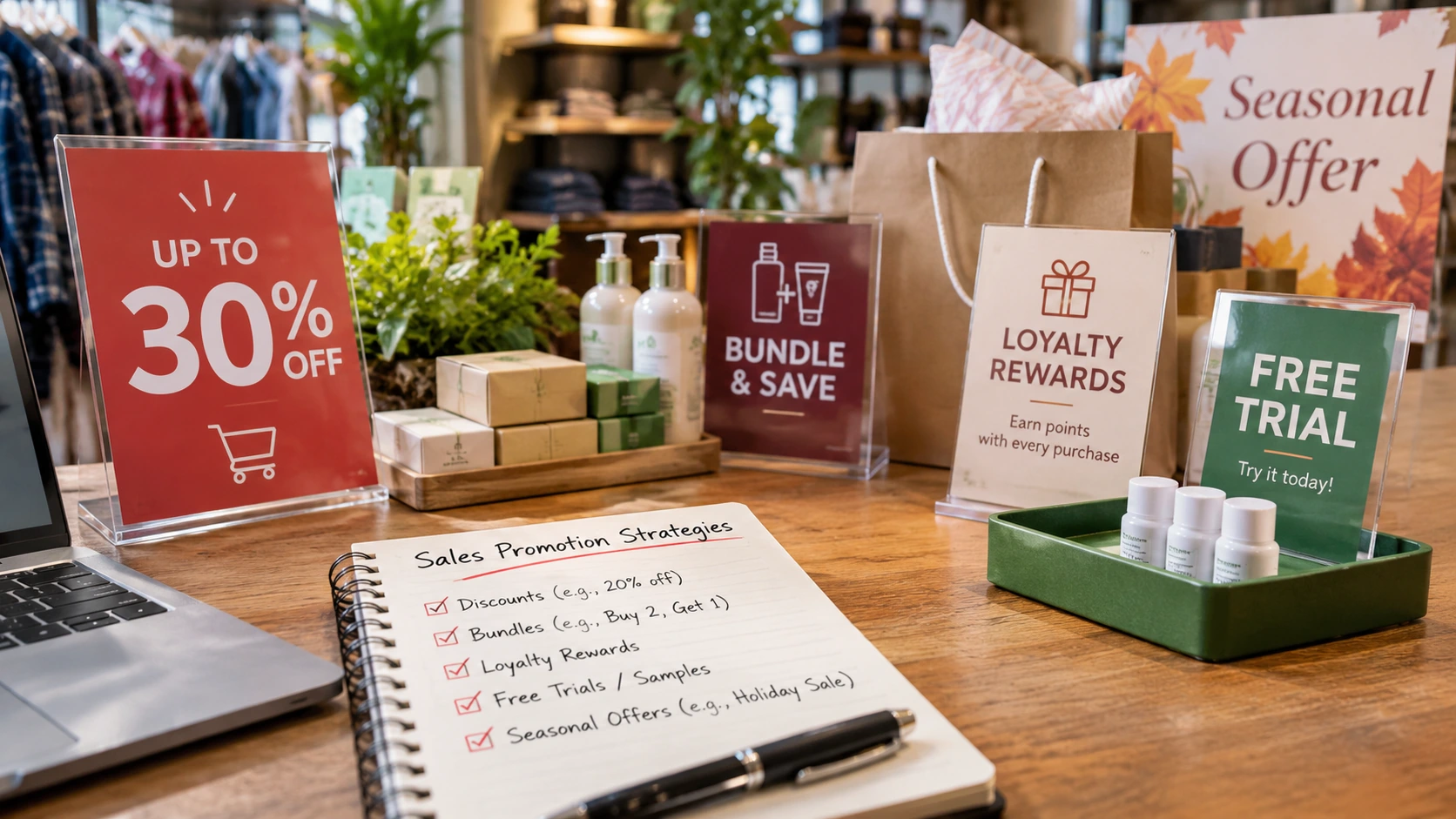
Sales promotion strategies are plans that use incentives to encourage purchases, product trials or repeat business. Common methods include discounts, bundles, samples, referral rewards and limited-time offers. The right approach depends on your objective, audience, costs and ability to measure what changed because of the promotion.
Types of Sales Promotion
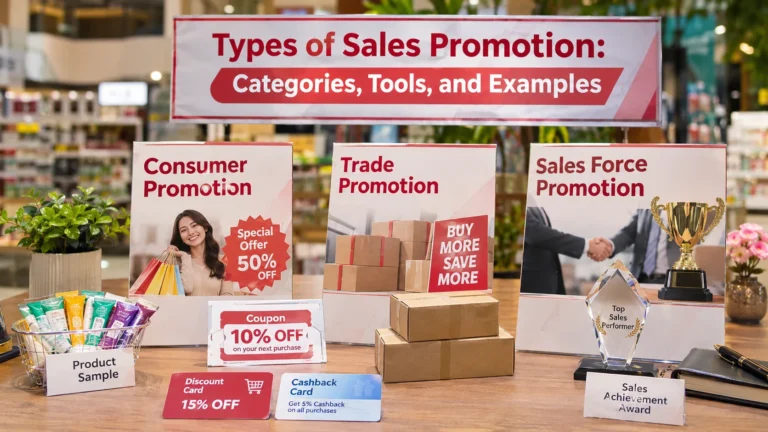
Sales promotions can target consumers or businesses within a distribution channel. That distinction helps you identify who needs an incentive and what action you want them to take. A skincare company encouraging shoppers to try a cleanser needs a different offer from a manufacturer encouraging retailers to stock it.
Consumer promotions reach end customers through coupons, samples, bundles or purchase rewards. Trade promotions target retailers, wholesalers or distributors through incentives such as temporary purchasing allowances or display support.
Marketing textbooks, including Principles of Marketing, also distinguish push and pull approaches. Push activities encourage intermediaries to carry and promote products. Pull activities encourage consumer demand.
Keep strategy and tactic separate. Clearing seasonal clothing inventory is an objective. Targeting shoppers interested in those items is part of the strategy. A discount is the tactic.
Sales Promotion Strategies for Small Businesses
Small businesses need offers they can afford and fulfil reliably. A promotion that creates more demand than your team can handle may disappoint customers or increase operating costs. I’d start with one measurable objective and one offer. For example, a bakery trying to sell spare afternoon stock needs a different approach from a subscription business encouraging first-time trials.
Discounts and Money-Off Coupons
Percentage discounts and fixed-amount coupons reduce the customer’s purchase price. They can support first purchases, targeted reactivation or stock clearance.
Keep eligibility specific. An online stationery shop might offer $5 off a first order above $40 rather than discounting every purchase. Check whether shipping, fulfilment and acquisition costs still leave enough contribution after the discount.
Product Bundles and Buy One Get One Offers
Bundles combine related products into one offer. Buy one get one promotions add another item either free or at a reduced price. A UK gardening shop could pair seeds, pots and compost in a starter bundle. The combination should make sense to the buyer. Unwanted extras add little value, even when the advertised saving looks generous.
Free Samples and Free Trials
Samples and trials let customers evaluate something before making a larger commitment. They suit products where uncertainty about taste, performance or usefulness prevents a purchase.
A tea retailer could include a sample of another blend with an existing order. A software provider might offer a time-limited trial. Explain any restrictions, payment requirements and cancellation terms clearly.
Loyalty Rewards and Referral Incentives
Loyalty rewards encourage return visits or purchases. Referral incentives reward an existing customer for bringing in someone new. For a cleaning service, a referral credit could become available after the referred customer completes a paid booking. That condition ties the reward to an actual transaction. Make redemption straightforward. Complicated rules weaken the offer.
Seasonal Offers and Purchase Thresholds
Seasonal promotions connect an offer to a relevant buying period. Purchase thresholds make an incentive available above a stated spending amount. A homeware store might offer delivery at no additional charge above £60. I’d compare that threshold with typical basket values and delivery costs before launching it. A threshold should make financial sense without encouraging customers to add unwanted items.
| Tactic | Useful objective | Main limitation |
| Targeted coupon | Encourage a first purchase | May subsidise an existing intention to buy |
| Product bundle | Sell complementary items together | Weak combinations feel unhelpful |
| Free sample | Reduce uncertainty about a product | Sampling costs need tracking |
| Referral credit | Attract customers through recommendations | Rewards require clear eligibility |
| Purchase threshold | Encourage a larger basket | Delivery or reward costs can absorb gains |
Examples of Sales Promotion
The following scenarios are hypothetical. They show how businesses could connect an offer to a specific problem without assuming that any promotion will produce guaranteed results. Notice how each example defines the customer action and limits eligibility. Those details make a campaign easier to explain, operate and assess.
- US clothing retailer: A retailer has excess summer shirts before autumn deliveries arrive. It discounts selected sizes for one week and tracks inventory sold alongside the contribution earned. Full-price new arrivals stay outside the campaign.
- UK bakery: A bakery has unused capacity on Tuesday afternoons. It tests a pastry-and-drink bundle during that period, then compares transactions and contribution with comparable Tuesdays. The owner also checks whether regular customers simply switch from higher-priced purchases.
- Online skincare shop: A shop includes a cleanser sachet with qualifying moisturiser orders. A follow-up message explains the product and provides a trackable purchase route. Sample distribution alone doesn’t count as success.
- Cleaning service: Customers receive a future booking credit after a referred household completes its first paid clean. The business checks acquisition costs, repeat bookings and staff availability before expanding the offer.
How to Create a Sales Promotion Strategy
A useful campaign plan connects the objective, audience, offer and measurement method before launch. That prevents decisions from being driven entirely by what competitors advertise. Consider a pet supplies retailer introducing a new dog food range. Its plan should explain whether success means product trial, profitable first orders or repeat purchases after the introductory offer ends.
Define Your Goal and Audience
Choose one primary objective. Examples include moving selected inventory, encouraging product trials or reactivating customers who haven’t purchased recently. Make it measurable. “Sell 80 remaining winter scarves within three weeks” gives the campaign a clearer purpose than “increase engagement.” That number is an illustrative target, not a benchmark. Then identify the relevant audience. Existing customers and first-time buyers may need different incentives.
Set the Offer and Check Your Margins
Calculate what remains after product costs, discounts and other variable costs. Include delivery subsidies, payment fees, rewards and additional labour where applicable.
My preference is to check the offer at individual order level before estimating total campaign revenue. A promotion becomes harder to justify when each additional order contributes too little toward operating costs. Set a budget cap. Define exclusions and redemption limits before launch.
Choose Timing, Channels and Clear Terms
Match the campaign period to the buying decision and your operating capacity. A lunchtime bakery offer and a furniture promotion won’t necessarily need the same duration. Use channels your intended customers actually encounter, such as an opted-in email list, your website or in-store signage. Advertising communicates the offer; the incentive is the promotion itself.
Show dates, eligibility, availability and important conditions clearly. Use genuine deadlines. Check relevant local requirements before running country-specific campaigns.
Test Before Expanding the Campaign
Start with a manageable audience, location or product group. Confirm that checkout rules, staff instructions and tracking work correctly. Change one major element at a time where practical. Otherwise, you may struggle to identify why performance changed. Decide in advance what would justify continuing, adjusting or stopping the campaign.
How to Measure Sales Promotion Effectiveness
Campaign revenue tells you what customers spent, but it doesn’t establish how much additional business the promotion created. Some customers would have purchased without an incentive. Others may buy earlier than usual. A stationery retailer running a back-to-school offer should therefore compare results with a reasonable baseline while accounting for seasonal demand.
Track measures connected to your objective:
- Incremental sales: Sales above a credible estimate of what would have happened without the campaign.
- Redemption rate: The share of issued or distributed offers redeemed, using a clearly defined denominator.
- Contribution: Revenue remaining after relevant variable costs.
- Repeat purchases: Whether participating customers return after the incentive ends.
- Inventory movement: Units sold from the stock the campaign targeted.
Consider simplified, hypothetical figures. A product sells for $50 and has $30 in variable costs, leaving $20 contribution. A 20% discount reduces the price to $40 and contribution to $10, assuming unchanged costs.
The business would need to sell twice as many units to match its previous contribution. Additional campaign costs would raise that requirement. I’d also review the weeks after the campaign. A temporary spike followed by weaker sales may indicate that purchases moved forward rather than increased overall.
Advantages and Disadvantages of Sales Promotion
Promotions can help customers try unfamiliar products, give existing customers a reason to return and move selected stock. Their usefulness depends on the offer and the business behind it. A food retailer clearing short-dated products faces a different decision from a consultancy focused on high ticket sales, where customers may value personalised consultations more than discounts. Copy
There are trade-offs. Discounts reduce contribution per purchase unless other factors offset the reduction. Frequent offers may encourage customers to wait for the next deal. Poorly targeted incentives can reward purchases that would have happened anyway.
Operational pressure matters too. A salon offering discounted appointments during already busy hours could replace full-price bookings while increasing staff workload. Spare capacity may provide a more sensible starting point.
Frequently Asked Questions
What Is the Difference Between Sales Promotion and Advertising?
Sales promotion provides an incentive to act, while advertising communicates a message to an audience. A coupon is a promotional incentive; a paid advert announcing that coupon is advertising.
How Do You Choose a Sales Promotion Strategy?
Choose an approach that fits your objective, customer needs, margins and operating capacity. Stock clearance, first-time trials and repeat purchases require different offers, so define the desired outcome before selecting a tactic.
Can Sales Promotions Work Without Discounts?
Yes, samples, added services, useful gifts and early access can provide incentives without reducing the listed price. These offers still carry costs, which should be included when assessing the campaign.
How Long Should a Sales Promotion Last?
A promotion should last long enough for the intended customer to act within your budget and capacity. There is no universal ideal duration; purchase frequency, decision complexity and the campaign objective all matter.
Why Can Sales Increase While Profit Falls During a Promotion?
Profit can fall when discounts and campaign costs outweigh the contribution from additional purchases. Higher order volume doesn’t automatically compensate for lower margins, extra fulfilment costs or incentives given to existing buyers.
Final Thoughts
Start with the business problem, then build the offer around it. A useful promotion gives customers a clear benefit while leaving you with a workable financial outcome. Keep the first test manageable, explain the conditions plainly and measure more than revenue. What happens after the offer ends can be just as revealing as the initial sales response.