
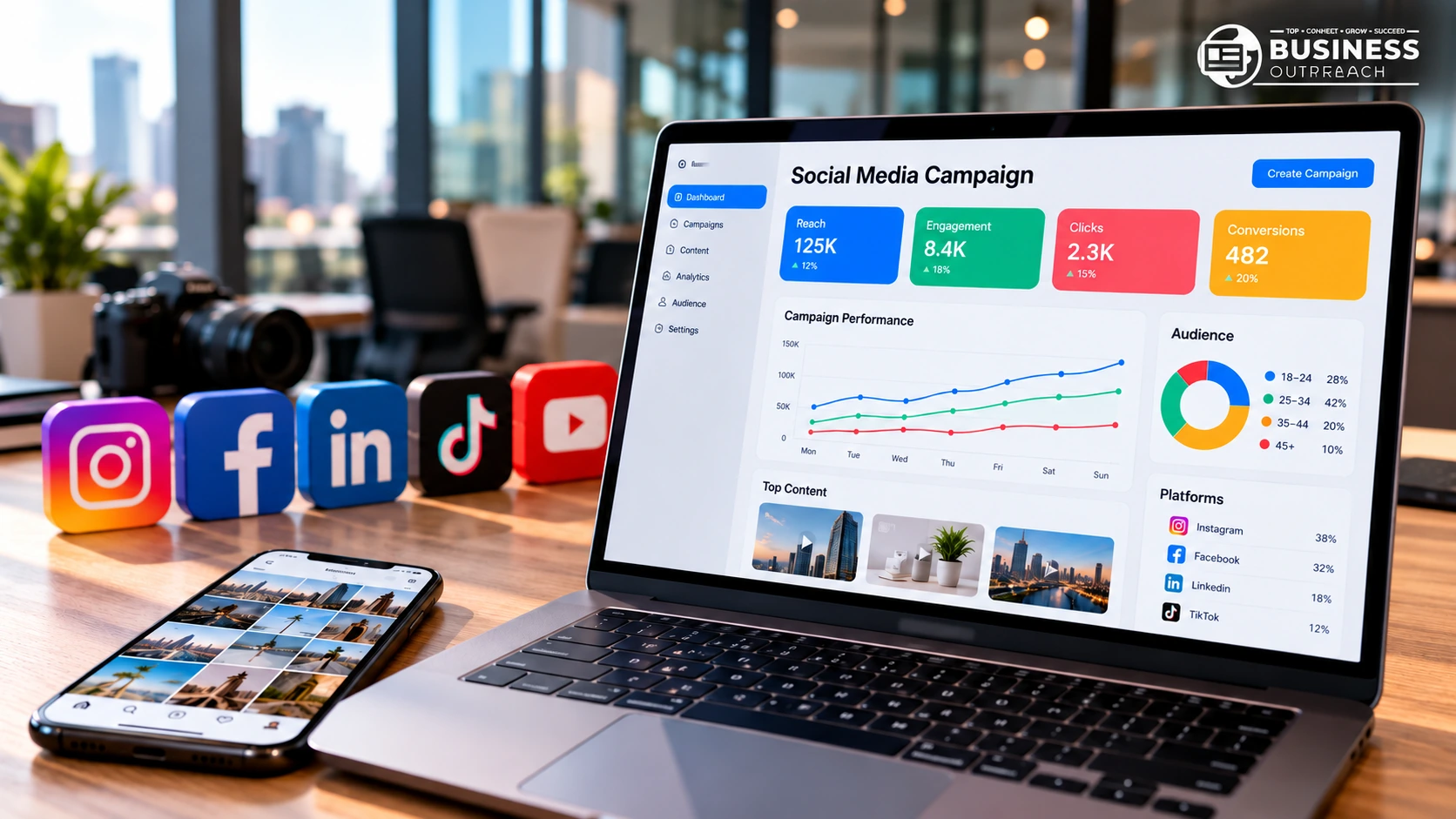
What Is a Social Media Campaign? How It Works and Why It Matters
A social media campaign is a coordinated set of social media activities designed to achieve a specific goal within a defined period or campaign phase. Unlike everyday posting, a campaign usually follows one clear message, targets a particular audience, and measures results against selected objectives. Businesses may use campaigns to increase awareness, promote a product, drive website visits, collect leads, or support an event. Understanding how campaigns work makes it easier to create purposeful content instead of posting without a clear outcome.
A social media campaign is a planned series of posts, ads, videos, or other social content built around one objective. It usually targets a defined audience, uses a consistent message, follows a planned timeline, and tracks results through relevant metrics such as reach, engagement, clicks, leads, or conversions.
What Is a Social Media Campaign?
A social media campaign is a focused marketing effort carried out on one or more social platforms to achieve a specific objective. It may include organic posts, paid ads, short videos, graphics, stories, live content, landing pages, or other assets that work together around the same goal.
The key idea is coordination. A campaign is not simply a collection of unrelated posts. Its content should support a shared message, audience, timeline, and intended result. For example, a company launching a new service might use teaser posts, educational videos, customer-focused benefits, and a clear call to action.
Campaigns can vary considerably in size. A local business might run a short campaign on one platform, while a larger brand may coordinate content across several channels. In both cases, the essential structure remains the same: a defined goal, planned content, targeted distribution, and measurable results.
How Does a Social Media Campaign Work?
Most campaigns follow a straightforward process. First, the marketer decides what the campaign should achieve. That objective then influences the target audience, platform selection, content, messaging, calls to action, budget, and performance metrics. A simple campaign flow looks like this:
Goal → Audience → Platform → Message → Content → Launch → Measurement
Suppose a business wants more registrations for an online webinar. It could identify people likely to attend, publish educational videos and reminder posts, direct users to a registration page, and track clicks and completed registrations. Every part of the campaign supports the same outcome. Monitor campaign performance while the activity is running. If one content format or message produces a stronger response, those insights can help improve later posts and future campaigns.
Social Media Campaign vs Regular Social Media Posting
Regular posting and campaign activity can look similar because both use social content. The main difference is purpose and coordination.
| Factor | Social Media Campaign | Regular Social Media Posting |
| Goal | Specific objective | Ongoing presence |
| Duration | Usually defined | Continuous |
| Messaging | Coordinated around one theme | Can cover multiple topics |
| CTA | Usually focused | Can vary |
| Measurement | Campaign-specific KPIs | General account metrics |
Regular posting helps a business stay visible, communicate with followers, and maintain an active presence. A campaign is more concentrated and gives multiple posts or activities one shared direction. This distinction matters because publishing several posts around the same time does not automatically make them a campaign. The content should be intentionally planned around a common objective.
Common Types of Social Media Campaigns
Brand Awareness Campaigns
Brand awareness campaigns aim to make more people familiar with a business, product, service, or message. Content may include educational posts, storytelling, recognizable visuals, or short videos. Metrics such as reach, impressions, or video views may help evaluate whether the campaign is gaining visibility.
Engagement Campaigns
Engagement campaigns encourage people to interact with content through comments, shares, saves, replies, polls, challenges, or user-generated content. Aim for meaningful interaction rather than collecting likes simply because large numbers look impressive.
Traffic Campaigns
Traffic campaigns move users from social media to another destination, such as a website, article, landing page, or product page. The content and destination should match closely. If a social post promises one thing but the landing page provides something different, users are less likely to continue.
Lead Generation Campaigns
Lead generation campaigns encourage potential customers to provide information or express interest. This may involve submitting a form, requesting information, joining a waitlist, downloading a resource, or registering for an event. A clear value proposition and simple conversion path are especially important in these campaigns.
Product or Service Promotion Campaigns
These campaigns focus on a particular product, service, launch, or offer. Content may explain benefits, demonstrate features, answer common questions, or show practical use cases. Effective promotional campaigns generally provide useful context instead of repeatedly telling users to buy.
Event Campaigns
Event campaigns promote webinars, conferences, workshops, online sessions, or physical events. Their content may include announcements, speaker highlights, reminders, countdowns, and registration prompts. Because events have a fixed date, campaign timing becomes especially important.
Key Elements of a Successful Social Media Campaign
A well-planned social media campaign usually includes:
- Clear objective: The campaign should have one primary outcome.
- Defined audience: Content should address a specific group rather than everyone.
- Suitable platforms: Platforms should fit the audience and content format.
- Consistent message: Posts can vary while still supporting one central theme.
- Relevant content: Formats should match both the platform and campaign purpose.
- Clear call to action: Users should understand what they are expected to do next.
- Realistic timeline: The campaign needs an appropriate start, duration, and publishing schedule.
- Measurement plan: Select relevant KPIs before the campaign begins.
These elements depend on one another. Strong creative content cannot fully compensate for an unclear goal, while precise targeting cannot fix confusing messaging.
How to Create a Social Media Campaign
1. Set a Clear Goal
Start by identifying exactly what the campaign should accomplish. “Get more attention” is too broad. A clearer objective might involve increasing event registrations, driving traffic to a landing page, promoting a service, or generating inquiries. The goal should be specific enough that you can later evaluate campaign results against it.
2. Define Your Target Audience
Think about who the campaign is intended to reach. Consider their needs, interests, problems, location, stage in the customer journey, and typical social media behavior. Trying to appeal to everyone often weakens the message. A clearly defined audience makes it easier to create relevant content and calls to action.
3. Choose the Right Platforms
A campaign does not need to appear on every social network. Choose platforms based on where the intended audience is active and which content formats suit the message. Platform selection should follow the audience and objective, not simply whichever network appears most popular. Businesses without an in-house team may also work with a social media marketing agency for small business to help plan platform selection, content, and campaign execution around their goals.
4. Develop the Campaign Message
Decide what users should understand, remember, or do after seeing the campaign. Keep the central message recognizable across posts without repeating identical wording. Consistent messaging helps separate a coordinated campaign from unrelated social content.
5. Plan Your Content
Create a simple content calendar showing formats, topics, publishing dates, and calls to action. A product launch, for example, might include teaser content, educational posts, a demonstration video, FAQs, key benefits, and a final launch announcement. Each piece of content should contribute something different while supporting the same campaign goal.
6. Set a Timeline and Budget
Determine when the campaign starts, how long it runs, and how often you’ll publish content. If paid promotion is involved, set a budget and decide which posts or audiences need additional distribution. Spending more does not fix an unclear objective, so make budget decisions after you establish the campaign direction.
7. Launch and Monitor the Campaign
Once the campaign goes live, track the metrics connected to its objective. Look for meaningful patterns instead of reacting to every small movement in performance. Monitoring can also reveal weak calls to action, broken links, underperforming creative, or audience segments that respond particularly well.
8. Review the Results
After the campaign ends, compare the results with the original goal. Identify which content, messages, and formats performed well and what should change next time. Focus the evaluation on the intended outcome. A lead-generation campaign, for example, should not be considered successful only because its posts received many likes.
Organic vs Paid Social Media Campaigns
An organic social media campaign relies mainly on unpaid content. Reach may come through existing followers, shares, search, recommendations, community interaction, and normal platform distribution. A paid campaign uses an advertising budget to distribute content to selected audiences. Paid promotion can expand reach, support audience targeting, and increase distribution beyond existing followers. Many campaigns combine both methods. Organic activity can support credibility and conversation, while paid distribution can help important content reach additional people. The right mix depends on the goal, audience, budget, and platform.
Simple Social Media Campaign Examples
A local gym might run a campaign encouraging beginners to join a new fitness program. Content could include short exercise demonstrations, trainer introductions, beginner FAQs, and a clear link to the registration page. A software company promoting a webinar might publish educational clips, speaker highlights, reminder posts, and registration CTAs. Registrations would be a more meaningful performance measure than likes alone.
An ecommerce business launching a product could publish teaser videos, demonstrations, feature explanations, FAQs, and a launch announcement while keeping the same central message throughout the campaign. A brand could also run a user-generated content campaign asking customers to share photos using its product. Participation, tagged posts, and useful community-created content can then become important performance indicators.
How to Measure a Social Media Campaign
The most useful metrics depend on the campaign objective. Using the same KPI for every campaign can lead to misleading conclusions.
| Campaign Goal | Useful Metrics |
| Awareness | Reach, impressions, video views |
| Engagement | Comments, shares, saves, replies |
| Traffic | Link clicks, landing-page visits |
| Leads | Form submissions, inquiries, registrations |
| Conversions | Purchases, sign-ups, completed actions |
Metrics should answer a useful question. If the campaign objective is website traffic, deep impressions may be encouraging, but they do not show whether people actually visited the website. It is also useful to compare individual campaign assets. Look at which content formats generated stronger responses, which messages produced more clicks, and which audiences completed the intended action. Those insights can improve future campaign planning.
Common Social Media Campaign Mistakes
A common mistake is creating content before defining the objective. This often produces visually attractive posts that don’t lead to a meaningful result. Another problem is targeting an audience that is too broad. When a message attempts to speak to everyone, it can become relevant to no one. Weak calls to action can create a similar issue because users may enjoy the content without knowing what to do next.
Businesses may also focus too heavily on vanity metrics, change the campaign message too frequently, or fail to review performance after the campaign finishes. Effective campaign management connects creative execution with measurable goals.
Frequently Asked Questions
What Is the Main Purpose of a Social Media Campaign?
The main purpose is to achieve a specific marketing or communication objective through coordinated social media activity. The goal may involve awareness, engagement, website traffic, leads, registrations, product promotion, or conversions.
How Long Should a Social Media Campaign Last?
There is no universal campaign length. Some campaigns run for several days, while others continue for weeks or longer. The appropriate duration depends on the objective, content volume, budget, audience behavior, and whether the campaign relates to a fixed event or launch.
Can a Social Media Campaign Be Organic?
Yes. A campaign does not require paid advertising. Businesses can use organic posts, videos, stories, community engagement, and user-generated content. Businesses can add paid distribution when they need more reach or more precise audience targeting.
What Makes a Social Media Campaign Successful?
A strong campaign usually combines a clear goal, defined audience, suitable platforms, consistent messaging, useful content, a clear call to action, and relevant performance measurement. Judge success against the original campaign objective rather than a single universal metric.
What Is the Difference Between a Social Media Campaign and a Social Media Strategy?
A social media strategy is the broader, long-term plan that guides a brand’s overall social presence. A social media campaign is a more focused initiative designed to achieve one specific objective within that broader strategy.
Final Thoughts
A social media campaign turns individual posts into a coordinated effort built around a clear objective. Strong campaigns connect the right audience, message, content, timing, and measurement so every activity has a purpose and the final results can be evaluated properly.



One Comment