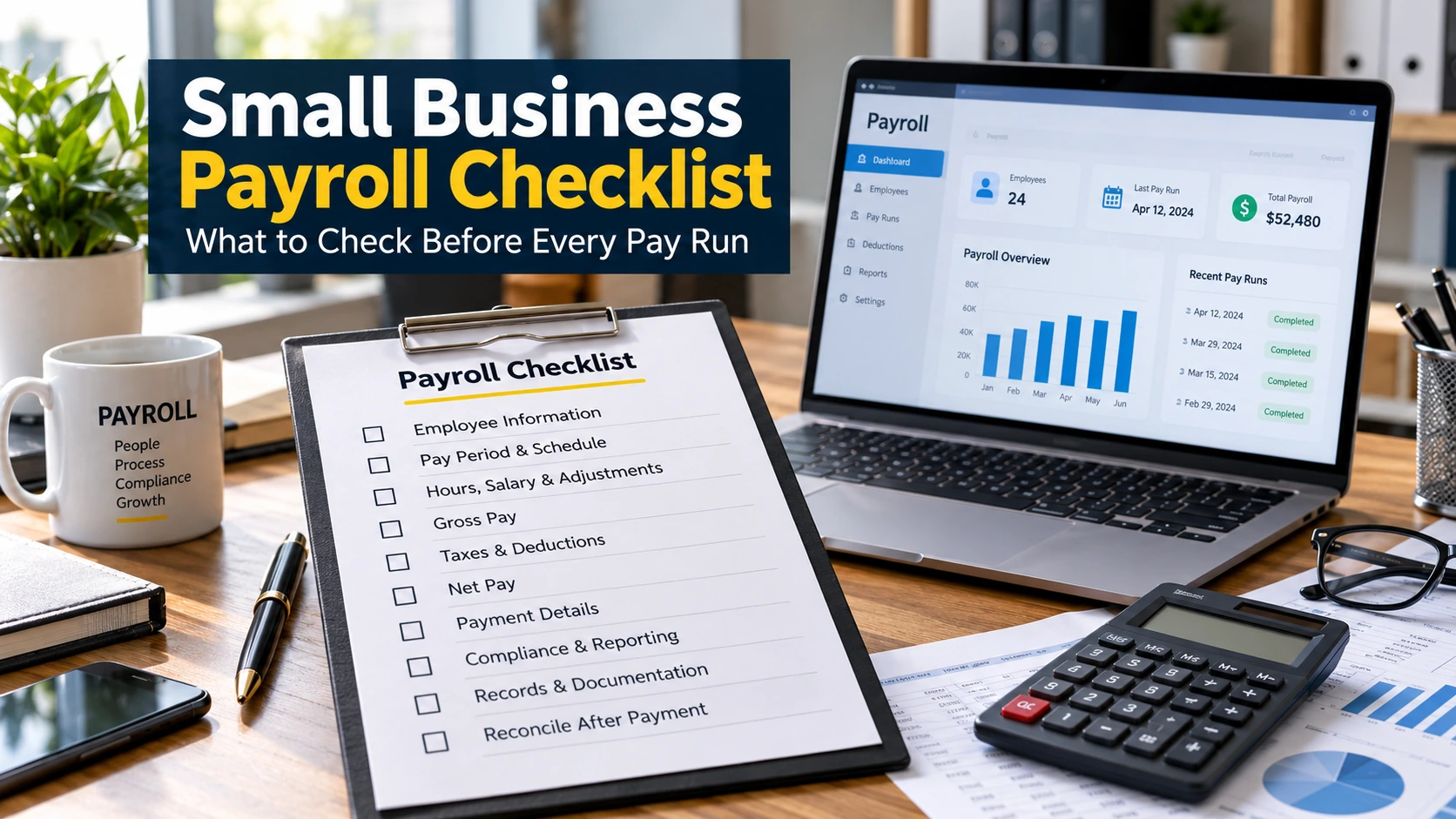
Small Business Payroll Checklist: What to Check Before Every Pay Run
Running payroll may look straightforward, but even a small mistake can affect employee trust, cash flow, accounting records, and compliance. A consistent Small Business Payroll Checklist helps reduce that risk by giving you the same review process before every pay run. From employee details and hours worked to deductions, net pay, payment information, and recordkeeping, each step matters. The goal is not to make payroll complicated, but to make it repeatable, accurate, and easier to review.
A Small Business Payroll Checklist should cover employee information, pay periods, hours or salary, gross pay, deductions, net pay, payment details, reporting obligations, and payroll records. After payment, the business should reconcile payroll against bank and accounting records and investigate unusual differences before the next pay cycle.
What Is a Small Business Payroll Checklist?
A small business payroll checklist is a repeatable set of checks used before, during, and after payroll processing. It helps make sure employee information is current, pay calculations are reasonable, deductions are applied correctly, payments are sent to the right place, and payroll records are retained.
The exact process will vary by business. A company with three salaried employees may have a simple payroll, while a business with hourly staff, commissions, overtime, benefits, contractors, or multiple locations may require more detailed controls.
Payroll rules also vary by jurisdiction. Tax withholding, statutory deductions, reporting requirements, worker classification, and recordkeeping rules may differ between countries and even between states or regions. For that reason, a good checklist should combine general payroll controls with the specific requirements that apply to your business.
1. Verify Employee and Worker Information
Start each payroll cycle by confirming that employee information is complete and up to date. Payroll errors often begin with incorrect records rather than incorrect calculations.
Check employee names, identification details, payment information, compensation arrangements, and any recent changes. New hires should be added correctly, while employees who have left the business should not remain active accidentally.
Worker classification also matters. Employees and independent contractors are usually handled differently for payroll and tax purposes. Classification rules vary by jurisdiction, so businesses should use the applicable local requirements rather than assuming every worker can be processed the same way.
Bank account details deserve extra attention because an otherwise accurate payroll can still fail if payment information is outdated or entered incorrectly.
2. Confirm the Pay Period and Payroll Schedule
Before entering wages, confirm which dates the payroll covers and when employees are supposed to be paid. This sounds basic, but an incorrect pay period can affect hours, leave, overtime, deductions, and payroll reporting.
Make sure the payroll cutoff date is clear. Timesheets, commissions, bonuses, leave adjustments, and expense information should reach payroll before that cutoff whenever possible.
Holiday periods and weekends can also affect payment timing. If your usual payroll date falls on a non-business day, confirm how your bank, payroll provider, and local rules handle the change. Keeping the same process from one pay period to the next makes payroll easier to audit and reduces last-minute decisions.
3. Review Hours, Salary, and Pay Adjustments
For hourly employees, verify the number of regular hours submitted for the pay period. Compare timesheets with attendance records or other approved time-tracking information where appropriate.
If overtime applies, confirm that qualifying hours have been identified correctly under the rules that apply to your workforce. Salaried employees should also be checked for any approved changes, unpaid leave, or other adjustments that affect the period.
Bonuses, commissions, reimbursements, paid leave, corrections from a previous payroll, and other adjustments should be reviewed separately. Manual entries deserve particular attention because they are easier to duplicate or enter incorrectly.
If an employee’s pay changes significantly from the previous period, investigate the reason before continuing. A large difference may be completely valid, but it should be understood rather than ignored.
4. Check Gross Pay Before Deductions
Gross pay is the amount earned before taxes and other deductions are removed. Reviewing it independently makes it easier to catch errors before they flow into net pay.
Compare gross pay with the employee’s normal amount or recent payroll history. For an hourly worker, confirm that the wage rate matches the approved rate and that the hours used are correct. For a salaried worker, verify that the expected salary amount has been applied for the pay period.
Large increases or decreases should have a clear explanation, such as overtime, a bonus, unpaid leave, commission income, or a correction. This comparison is one of the simplest payroll controls a small business can use.
5. Review Taxes, Withholdings, and Other Deductions
Once gross pay is correct, review all deductions. Some deductions may be required by law, while others arise from employee benefits, retirement plans, repayment arrangements, or voluntary programs. The exact deductions depend on where the business operates and what benefits it provides.
| Statutory | Payroll tax, required social contributions | Correct rules and current employee information |
| Benefits | Health or insurance deductions | Enrollment and approved amount |
| Retirement/Pension | Employee plan contributions | Contribution rate or election |
| Voluntary | Optional employee deductions | Written authorization where required |
| Adjustments | Corrections or repayments | Reason, amount, and supporting record |
Do not assume that one country’s payroll deduction rules apply everywhere. A business operating in the US may have different withholding and reporting obligations from a UK employer, and both differ from other jurisdictions.
The most important control is that every deduction has a valid reason and is calculated under the rules that apply to that employee.
6. Confirm Net Pay for Every Employee
Net pay is the amount the employee actually receives after deductions. Even if the payroll system calculates it automatically, it should still be reviewed.
Compare each employee’s net pay with previous pay periods. A major change may indicate new deductions, overtime, bonus pay, unpaid leave, or another legitimate adjustment. If nothing explains the difference, investigate before payroll is submitted.
Watch for unusually low, zero, or negative net pay. These situations may be valid in limited circumstances, but they should never pass through payroll unnoticed. This employee-level review is especially useful because a payroll total can look reasonable even when one employee’s payment is wrong.
7. Verify Payment and Banking Details
After pay calculations are complete, confirm how each employee will receive payment. Direct deposit details, bank information, payment method, and payment date should all be accurate.
Check the total amount that will leave the business bank account and make sure sufficient funds are available. Payroll should not be approved only to discover that the payment account cannot cover wages and related obligations.
Also check for duplicate payment instructions, recently changed bank details, or rejected payments from the previous payroll. Changes to payment information should receive additional verification because banking errors can be difficult to reverse once funds are sent.
8. Review Payroll Taxes and Reporting Requirements
Payroll accuracy and payroll compliance are related, but they are not the same thing. A business may pay employees the correct amount while still missing a reporting, tax, or recordkeeping obligation.
Depending on the jurisdiction, employers may need to withhold taxes, make employer contributions, submit payroll reports, deposit amounts with a tax authority, or provide employees with required payroll documents.
Deadlines also vary. The safest approach is to maintain a compliance calendar based on the rules that apply to your business rather than relying on generic payroll dates found online. Businesses with employees in more than one state, region, or country may need additional review because obligations can differ across locations.
9. Complete a Final Pre-Payroll Review
Before approving payroll, perform one final check of the complete pay run. This should be separate from the initial data entry whenever possible.
A practical Small Business Payroll Checklist before submission should confirm:
- employee count and active status are correct
- hours, salary, bonuses, and adjustments are verified
- gross pay and deductions look reasonable
- net pay has been reviewed for unusual changes
- payment and bank information is current
- payroll totals have been approved
- required reporting and payment dates are known
Even a short final review can catch errors that were missed earlier in the process.
10. Save Payroll Records and Documentation
Once payroll is approved, keep the records needed to explain how the pay run was calculated. Useful payroll documentation can include payroll registers, timesheets, salary records, deduction details, payment confirmations, employee payroll forms, adjustment records, and reporting documents.
Good documentation creates an audit trail. If an employee questions a payment several months later, the business should be able to see what was entered, what was deducted, when payment was made, and why any adjustment occurred.
Retention periods differ by jurisdiction, so businesses should follow the applicable local recordkeeping requirements rather than using one universal timeframe.
11. Reconcile Payroll After Payment
Payroll work does not end when employees receive their money. The next step is reconciliation. Compare the payroll register with the amount that actually left the business bank account. Then confirm that payroll expenses, liabilities, deductions, and employer contributions have been recorded correctly in the accounting system.
Rejected or returned payments should be investigated quickly. The same applies to any difference between the approved payroll total and the amount processed by the bank or payroll provider. Reconciliation is especially important when manual adjustments are common because small errors can otherwise carry forward into future periods.
12. Complete Monthly and Year-End Payroll Checks
Regular pay runs focus on individual periods, while monthly and year-end checks look for larger patterns. Review payroll accounts for unreconciled balances, unpaid liabilities, recurring corrections, outdated employee information, and unusual changes in total payroll cost.
Year-end requirements depend on the jurisdiction, but businesses commonly need to review cumulative employee information, payroll reports, and required employee or government forms. It is also a good time to verify whether pay rates, benefits, deductions, contact details, and employee status information need updating before the next payroll year begins.
Common Small Business Payroll Mistakes to Avoid
Many payroll mistakes are caused by process problems rather than complex calculations. Outdated employee information, missing timesheets, incorrect wage rates, duplicated adjustments, and unreviewed bank changes can all create errors.
Another common problem is treating payroll as complete immediately after payment. Without reconciliation, rejected transactions or accounting differences may remain unnoticed.
Businesses should also avoid assuming that payroll software removes the need for review. Software can automate calculations, but it still depends on the information entered into it.
Finally, do not treat compliance requirements as identical everywhere. Payroll tax, employment, reporting, and recordkeeping rules should always be checked against the jurisdiction where the business and employees are located.
Small Business Payroll Checklist at a Glance
| Employee setup | Employee status, pay rate, payment details, required records |
| Pay period | Dates, cutoff, payment date, payroll frequency |
| Earnings | Hours, salary, overtime, bonuses, commissions, adjustments |
| Calculations | Gross pay, deductions, net pay |
| Payment | Bank details, payroll total, available funds |
| Compliance | Taxes, reporting, deadlines, local requirements |
| Records | Payroll register, timesheets, deduction and payment records |
| After payroll | Bank reconciliation, accounting entries, rejected payments |
The purpose of the checklist is consistency. Small businesses do not need a complicated payroll process, but they do need a process that makes unusual amounts, missing information, and unexpected changes easier to identify.
Frequently Asked Questions
What should be included in a small business payroll checklist?
A Small Business Payroll Checklist should cover employee information, pay periods, hours or salary, gross pay, deductions, net pay, payment details, reporting obligations, payroll records, and post-payroll reconciliation. The checklist should also reflect the specific payroll rules that apply to the business’s jurisdiction.
What should I check before running payroll?
Before payroll is submitted, confirm active employees, hours worked, salary amounts, bonuses, adjustments, deductions, net pay, bank details, payroll totals, and available funds. Any unusual change from the previous pay period should be reviewed before approval.
How often should payroll be reviewed?
Every payroll run should receive a basic review before payment. Businesses should also perform broader monthly and year-end checks to identify unreconciled balances, outdated records, repeated corrections, or reporting obligations that may not appear in a single pay cycle.
What records should a small business keep after payroll?
Payroll registers, employee pay records, timesheets, deduction details, payment confirmations, adjustments, and required tax or reporting documents are commonly important. The exact records and retention period depend on local payroll and employment rules.
What is payroll reconciliation?
Payroll reconciliation is the process of comparing approved payroll calculations with actual bank payments and accounting records. It helps identify rejected payments, duplicate transactions, incorrect accounting entries, and differences between expected and actual payroll totals.
Can a small business run payroll manually?
A very small business may be able to manage payroll manually, but the process becomes more difficult as employee numbers, overtime, deductions, benefits, locations, and reporting obligations increase. Whatever method is used, calculations should be reviewed and payroll records should remain complete and consistent.
Final Thoughts
A reliable Small Business Payroll Checklist turns payroll into a repeatable process instead of a last-minute calculation. Verify the data, review unusual changes, reconcile every pay run, and always apply the payroll rules that are relevant to your location and workforce.