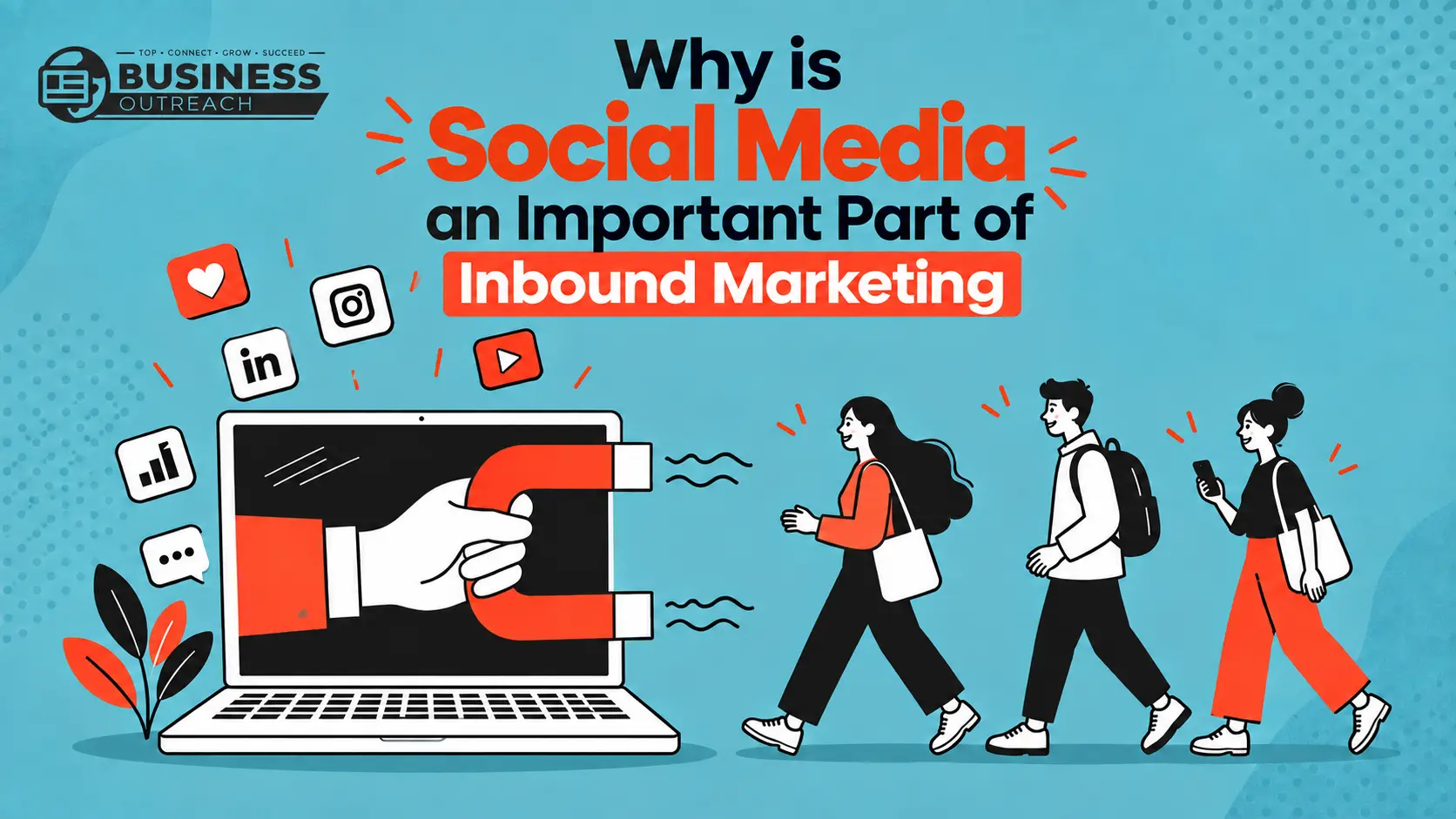
Why Is Social Media Important for Inbound Marketing Strategy?
Inbound marketing works by attracting people with useful information instead of relying only on direct promotion. Social media supports that process by helping businesses distribute content, reach relevant audiences, encourage interaction, and guide interested users toward websites or other owned channels. It can also help marketers understand what their audience cares about and continue conversations over time. However, social media is only one part of inbound marketing and works best when connected with content, SEO, email, and a clear customer journey.
Social media is an important part of inbound marketing because it helps businesses distribute useful content, reach relevant audiences, encourage engagement, and drive interested users toward websites and other owned channels. It can also support lead generation, relationship building, audience research, and ongoing nurturing throughout different stages of the customer journey.
What Is Inbound Marketing?
Inbound marketing is a strategy focused on attracting potential customers through useful, relevant, and helpful experiences. Instead of interrupting people with messages they did not ask for, inbound marketing aims to appear when they are actively looking for information, solutions, or guidance. Content often sits at the center of this approach. Blog posts, videos, guides, emails, tools, and educational resources help answer questions and build familiarity with a business over time. Social media supports this system by helping that content reach people beyond the company website. It gives businesses another way to attract attention, start conversations, and encourage audiences to take the next step.
Why Is Social Media an Important Part of Inbound Marketing?
Social media matters because inbound marketing depends on getting useful content in front of the right people and helping those people move naturally toward deeper engagement. A strong article may provide excellent information, but it still needs an audience. Social platforms can extend its reach, create opportunities for interaction, and direct interested users toward owned channels where the relationship can continue. Here are the main ways social media supports an inbound strategy.
1. It Helps Distribute Useful Content
Creating valuable content is only the first step. Businesses also need ways to distribute it. Social media allows marketers to share blog posts, videos, checklists, guides, webinars, case studies, and other useful resources with audiences who may not already visit the company website.
For example, a business can publish a detailed guide on its website and then share selected insights from that guide through social posts. People who find the topic relevant can follow the link to explore the full resource. This creates another route into the inbound marketing system.
2. It Expands Audience Discovery
Search engines are important for inbound marketing, but not every customer begins with a search query. People also discover ideas, companies, and educational content while browsing social platforms.
A useful post can introduce a business to someone who has never heard of it before. If that person finds the information relevant, they may visit the profile, explore the website, or follow the account for future content. This does not mean every social impression becomes a lead. The value lies in increasing the chances that relevant people can discover useful content.
3. It Encourages Engagement
Inbound marketing is not only about attracting visitors. It also involves building relationships. Social media creates direct opportunities for interaction through:
- Comments
- Replies
- Shares
- Direct messages
- Polls
- Community discussions
- Questions and answers
These interactions can help a business understand what its audience needs while also making communication feel less one-sided. For example, a reader may comment on a post with a question that becomes the topic of a future article. That creates a useful feedback loop between audience engagement and content planning.
4. It Builds Familiarity and Trust
People rarely become customers simply because they see one piece of content. Repeated exposure to helpful information can make a business more familiar over time. Social media supports this by allowing brands to stay visible between website visits, email interactions, or search sessions.
A company that consistently shares clear, useful, and relevant content may gradually become a trusted source of information for its audience. Trust is never automatic, though. Poor-quality content, exaggerated claims, or constant promotion can weaken credibility rather than improve it.
5. It Can Drive Website Traffic
Social media can act as a bridge between short-form discovery and deeper website content. A social post might introduce a topic, while the website provides the full explanation, guide, comparison, or resource. Businesses can direct users toward:
- Blog posts
- Resource pages
- Landing pages
- Educational guides
- Product information
- Case studies
- Webinar registration pages
The goal should not simply be to generate as many clicks as possible. Qualified traffic matters more than raw numbers. A smaller group of genuinely interested visitors may be more valuable than a large amount of irrelevant traffic.
6. It Supports Lead Generation
Social media can also help move interested users toward lead-generation opportunities. For example, a business may share useful content and then direct readers toward:
- Downloadable guides
- Templates
- Email newsletters
- Webinars
- Free resources
- Contact forms
- Product demonstrations
This supports inbound lead generation because the user chooses to take the next step after finding the content useful or relevant. However, simply posting links does not guarantee leads. The offer, audience, landing page, and overall user experience still need to be strong.
7. It Helps Nurture Potential Customers
Not everyone who discovers a business is ready to make a decision immediately. Some people may spend days, weeks, or even months learning, comparing options, and evaluating providers. Social media gives businesses a way to remain useful during that process.
Educational posts, customer stories, explanations, industry insights, and answers to common questions can keep the relationship active without requiring constant direct sales messages. This makes social media especially useful for longer buyer journeys where people need repeated information before moving forward.
8. It Provides Audience Insights
Social platforms also give marketers a direct view of audience reactions. Comments, questions, shares, saves, and recurring discussion topics can reveal what people find useful, confusing, interesting, or frustrating. These insights can help marketers identify:
- Common customer problems
- Frequently asked questions
- Content gaps
- Objections
- Popular topics
- Emerging interests
- Useful language and terminology
That information can then influence future blog posts, videos, email campaigns, landing pages, and other inbound content.
9. It Supports Content Amplification
Useful content can travel beyond the original audience when people share, repost, quote, or discuss it. This amplification can introduce a business to new audiences without requiring every interaction to begin directly from the company account.
For example, an educational post may be shared by an existing follower with colleagues or friends who also find the subject relevant. The amount of amplification depends on content quality, audience fit, timing, and platform behavior. It should be treated as an opportunity rather than a guaranteed result.
How Social Media Supports the Inbound Marketing Journey
Social media can contribute at several points in the customer journey.
| Inbound Stage | Social Media’s Role |
| Attract | Helps people discover useful content and the brand |
| Engage | Creates opportunities for conversations and education |
| Convert | Directs interested users toward resources and lead forms |
| Nurture | Maintains communication through ongoing useful content |
| Retain | Supports education, updates, and customer communities |
Different businesses may use different names for these stages, but the principle is similar. Social media can support movement from initial awareness toward deeper engagement without needing to handle every part of the process itself.
Social Media vs Inbound Marketing
Social media and inbound marketing are closely connected, but they are not the same thing. Inbound marketing is the broader strategy. It can include SEO, content marketing, email, lead nurturing, website optimization, landing pages, and other channels or tactics.
Social media is one channel that can support those activities. A company might use social media to promote a new educational guide, discuss customer questions, distribute videos, or encourage newsletter sign-ups. Those activities can support inbound goals.
However, social media can also be used for outbound promotion, paid advertising, direct sales campaigns, or other purposes. That means not every social media activity should automatically be considered inbound marketing.
Organic Social vs Paid Social in Inbound Marketing
Both organic and paid social can contribute to an inbound strategy, but they work differently.
Organic Social
Organic social activity includes posts and interactions that do not depend on paid promotion. It may involve:
- Sharing educational content
- Answering questions
- Posting useful tips
- Participating in conversations
- Building communities
- Sharing customer resources
Organic activity can help build familiarity and relationships over time.
Paid Social
Paid social allows businesses to promote content to selected audiences. A company might use paid distribution to reach more people with a useful guide, webinar, or educational resource. Paid social is not the same as organic inbound attraction, but it can still support an inbound strategy if it connects relevant audiences with genuinely useful content. The key difference is how you reach the audience, not necessarily what happens after the click.
Which Social Media Platforms Work Best for Inbound Marketing?
There is no single platform that works best for every business. The right choice depends on:
- Target audience
- Industry
- Content format
- Business goals
- Available time and resources
- Where customers already spend attention
For example, LinkedIn may be useful for some B2B companies, while Instagram or TikTok may suit highly visual consumer brands. YouTube can support educational video content, while Pinterest may work well for topics where users actively search for ideas and inspiration. Businesses usually benefit more from choosing platforms strategically than trying to maintain an active presence everywhere.
Common Mistakes When Using Social Media for Inbound Marketing
Social media becomes less effective when activity is disconnected from audience needs and the wider inbound strategy. Common mistakes include:
- Posting only promotional content
- Measuring success only through follower counts
- Sharing content without understanding the target audience
- Ignoring comments and questions
- Using every platform without a clear reason
- Driving users toward weak landing pages
- Focusing on clicks without considering traffic quality
- Publishing consistently without reviewing performance
Vanity metrics can be particularly misleading. A post may receive many impressions or likes while producing little meaningful engagement, website activity, or lead interest. Marketers should measure results according to the purpose of the content.
How to Use Social Media More Effectively in an Inbound Strategy
The strongest approach is to connect social activity with audience needs and wider marketing goals.
Share Content That Solves Real Problems
Useful content gives audiences a reason to pay attention. Instead of constantly promoting products, share information that answers questions, explains concepts, or helps people overcome common problems.
Match Content to Audience Needs
Different audiences respond to different topics and formats. Marketers should understand what their target customers want to learn before deciding what to publish.
Encourage Useful Conversations
Inbound marketing is built around relationships, not one-way broadcasting. Responding to questions and participating in relevant discussions can make social channels more valuable for both the business and the audience.
Direct Users Toward Relevant Owned Content
Social media platforms are third-party channels. Whenever appropriate, businesses can guide interested users toward owned assets such as websites, blogs, email lists, and resource libraries where deeper engagement is possible.
Track Quality Traffic and Leads
Social performance should be connected to meaningful business and marketing outcomes. Instead of looking only at likes or followers, marketers can evaluate whether social activity contributes to relevant website visits, lead actions, content engagement, or customer conversations.
Use Audience Feedback to Improve Content
Questions and discussions can become valuable research. Repeated audience questions may reveal opportunities for new articles, guides, videos, FAQs, or lead resources.
Focus on Platforms That Fit the Audience
Being active everywhere can stretch resources too thin. A focused presence on a few relevant platforms is often easier to manage and evaluate than maintaining weak activity across many channels. For businesses that lack the time or expertise to manage these channels internally, a social media marketing agency for small business can provide support with platform selection, content planning, and ongoing social activity.
Frequently Asked Questions
Why is social media important in inbound marketing?
Social media supports inbound marketing by helping useful content reach relevant audiences, encouraging engagement, driving interested users toward owned channels, supporting lead generation, and maintaining relationships throughout the customer journey.
Is social media considered inbound marketing?
Social media can be part of inbound marketing, but it is not automatically inbound. It becomes part of an inbound strategy when it helps attract, educate, engage, or nurture audiences through useful and relevant content.
How does social media help attract customers?
Social media can increase content discovery and brand visibility. People may encounter educational posts, videos, guides, or discussions and then choose to learn more through the company’s website or other channels.
Can social media generate inbound leads?
Yes, it can support lead generation by directing interested users toward resources such as newsletters, webinars, downloadable guides, landing pages, or contact forms. Results depend on audience relevance, content quality, and the strength of the offer.
How does social media support the buyer journey?
Social media can support awareness through content discovery, engagement through conversations, conversion through relevant resources, and nurturing through ongoing educational communication. Its role changes depending on where the potential customer is in the journey.
Final Thoughts
So, why is social media an important part of inbound marketing? It helps businesses extend useful content beyond their websites, reach relevant people, encourage conversations, and guide interested audiences toward deeper engagement. Its strongest value comes when social activity works alongside content, SEO, email, and other inbound channels rather than operating as a separate strategy.