What Is in a Business Plan? Key Components Explained
A business plan explains what a business does, who it serves, how it operates, and how it expects to make money. It can help founders organize an idea, communicate with lenders or investors, and make better internal decisions. However, not every plan needs the same level of detail. A small consulting business may need a much simpler document than a startup seeking outside funding. Understanding what goes into a business plan helps you include useful information rather than filling pages simply because a template tells you to.
A business plan typically includes an executive summary, company description, market and competitor analysis, management structure, products or services, marketing and sales strategy, operations, funding needs, financial projections, and supporting documents. The exact structure depends on the business, the audience, and the reason for creating the plan. If you’re starting from scratch, learning how to write a business plan can help you organize these sections around your specific goals and audience.
What Is a Business Plan?
A business plan is a structured document describing how a business intends to operate, compete, grow, and manage its finances. It can be used internally to clarify goals and guide decisions. Businesses may also prepare formal plans for lenders, investors, partners, or other stakeholders.
The level of detail should match the purpose. For example, a self-employed graphic designer planning next year’s income and marketing may only need a concise internal plan. A technology startup seeking $500,000 in investment will usually need more in-depth market research, management information, financial forecasts, and a clear explanation of how the funds will be used. In my experience, useful plans are built around decisions rather than page count.
What Is Included in a Business Plan?
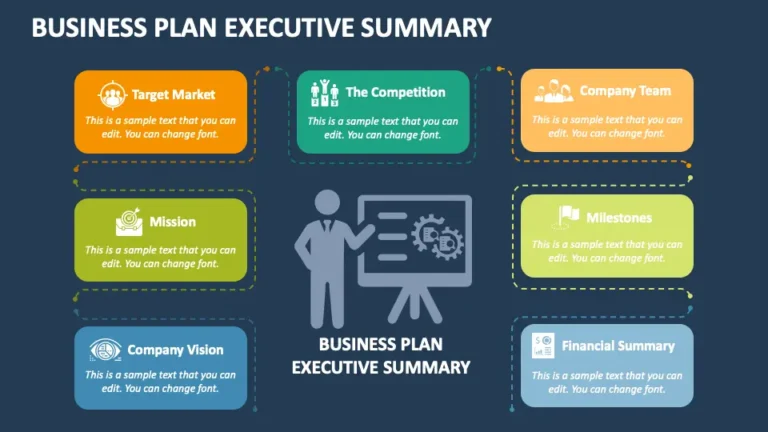
The exact business plan structure can vary, but traditional plans usually contain several core sections. Each one answers a different question about how the business will work.
1. Executive Summary
The executive summary gives readers a concise overview of the entire plan.
It usually includes:
- The business concept
- Main products or services
- Target customers
- Key objectives
- Basic financial information
- Funding requirements, if applicable
Although this section appears first, it is often easier to write after completing the rest of the plan. For example, a meal-preparation startup might summarize its target market as busy professionals, explain its weekly subscription model, and state its main growth goal. The summary should provide enough context for someone to understand the business without repeating every detail that follows.
2. Company Description
The company description explains what the business is and why it exists. It may cover the business name, location, ownership, operating model, mission, goals, and the problem being solved.
A mobile dog-grooming business, for example, could explain that it serves pet owners within a 15-mile radius who prefer in-home grooming rather than traveling to a salon. This section should be specific. Phrases such as “we provide high-quality solutions” tell the reader very little. Explain what you actually provide, who needs it, and why the business has a reason to exist.
3. Market Analysis
Market analysis shows that you understand the environment in which the company will operate.
Useful information may include:
- Target market
- Customer needs
- Customer segments
- Industry conditions
- Demand
- Relevant market trends
- Geographic considerations
Suppose someone wants to open a children’s tutoring center. Their market analysis might examine the number of families in the service area, school-age demographics, common tutoring needs, local pricing, and whether demand changes during exam periods. Large market numbers alone are not enough. One mistake I keep seeing is treating market size as proof that customers will choose a particular business. The analysis should connect market evidence to the actual customer and offer.
4. Competitive Analysis
Competitive analysis looks specifically at the alternatives customers already have. This includes direct competitors offering similar products and indirect competitors solving the same problem in different ways. For example, a local gym does not compete only with nearby gyms. Home workout platforms, personal trainers, sports clubs, and fitness apps may also compete for the same customer’s time and money.
A useful competitive analysis can examine:
- Pricing
- Products or services
- Target audiences
- Locations
- Customer reviews
- Strengths
- Weaknesses
- Market positioning
The purpose is not to claim that competitors are bad. It is to understand where your business fits.
5. Organization and Management
This section explains who owns and operates the business.
Depending on the company, it can include:
- Ownership structure
- Management roles
- Key employees
- Responsibilities
- Relevant qualifications
- Hiring requirements
A one-person consulting business does not need to create a complicated management chart. A growing construction company, however, may need to explain who handles sales, project management, finance, site supervision, and subcontractor coordination. The level of detail should reflect how complicated the organization actually is.
6. Products or Services
This part describes what customers will buy. Explain the product or service, the problem it solves, how it is delivered, and why customers might choose it.
Depending on the business, you may also discuss:
- Pricing
- Suppliers
- Product development
- Service packages
- Intellectual property
- Product lifecycle
- Future offerings
Consider a bookkeeping company that charges a fixed monthly subscription fee. Instead of writing that it offers “financial solutions,” the plan could specify monthly bookkeeping, account reconciliation, reporting, and payroll support for small businesses. Clear descriptions make financial and marketing sections easier to understand later.
7. Marketing and Sales Strategy
The marketing and sales section explains how the company expects to attract customers and turn interest into revenue.
It may include:
- Positioning
- Marketing channels
- Pricing strategy
- Sales process
- Customer acquisition
- Promotions
- Retention methods
A local landscaping company might rely on Google search visibility, referrals, neighborhood signage, and repeat seasonal contracts. A B2B software company could depend more heavily on content marketing, product demonstrations, outbound sales, and partnerships. I’d always connect marketing choices to the target customer instead of listing every possible channel. The plan should explain why a chosen method makes sense.
8. Operations Plan
The operations plan describes how the business works day to day.
Depending on the company, this may cover:
- Business location
- Suppliers
- Staffing
- Equipment
- Technology
- Inventory
- Production
- Delivery
- Customer support
- Quality control
For example, a small bakery may explain where its ingredients come from, how many products it can produce daily, staffing requirements, opening hours, food storage, and how online orders are collected. An operations section helps expose practical gaps. A sales forecast means little if the business cannot produce or deliver enough to support it.
9. Funding Request
A funding request is relevant when the business seeks external financing.
It should clearly explain:
- How much funding is required
- What the money will be used for
- When it is needed
- The type of financing being sought.
- How funding supports business objectives
For instance, a manufacturer seeking $200,000 might allocate part of the money to equipment, inventory, hiring, and working capital. Avoid asking for a large round number with no explanation. Not every business plan needs this section. If the document is purely for internal planning and no financing is required, a formal funding request may add little value.
10. Financial Projections
Financial projections translate the business strategy into numbers.
Common elements include:
- Revenue forecasts
- Estimated expenses
- Profit and loss forecasts
- Cash flow forecasts
- Balance sheet projections
- Break-even analysis
Financial assumptions matter as much as the final numbers. Imagine a café forecasting $30,000 in monthly sales. Readers need to understand how that figure was calculated. It might be based on 150 daily transactions, an average order value, opening days, and expected seasonal changes.
I’d rather see a conservative projection with clear assumptions than an impressive figure with no supporting evidence. Cash flow also deserves attention. A business can show an accounting profit yet still struggle if cash arrives after major bills are due.
11. Appendix and Supporting Documents
The appendix contains evidence or detailed information that would interrupt the flow of the main plan.
Possible documents include:
- Management resumes
- Detailed research
- Product specifications
- Licenses or permits
- Legal documents
- Financial schedules
- Charts
- Property information
For example, a restaurant plan might place a detailed equipment list, sample menu, or manager resume in the appendix rather than adding several pages to the main operations section.
Only include material that supports the plan.
Business Plan Components at a Glance
| Component | Main Question It Answers |
| Executive summary | What is the overall business plan? |
| Company description | What does the business do? |
| Market analysis | Who are the customers and what is the market like? |
| Competitive analysis | What alternatives do customers already have? |
| Organization and management | Who owns and runs the business? |
| Products or services | What does the business sell? |
| Marketing and sales | How will customers be reached and converted? |
| Operations | How will the business function day to day? |
| Funding request | How much outside funding is needed and why? |
| Financial projections | How might the business perform financially? |
| Appendix | What supporting evidence is available? |
Traditional vs Lean Business Plan Structure
Not every entrepreneur needs a long traditional document.
| Traditional Business Plan | Lean Business Plan |
| Usually more detailed | Usually shorter |
| Covers major areas separately | Focuses on essential information |
| Useful when deeper documentation is needed | Useful for quick internal planning |
| Often includes detailed forecasts and research | Easier to revise frequently |
A traditional plan may make sense when a lender or investor needs detailed evidence. A lean plan may suit an early-stage founder testing a business model. Neither format is automatically better. The appropriate choice depends on why you are creating the plan and who will use it.
Examples of Business Plan Components
Local Coffee Shop
A coffee shop plan could focus heavily on location, nearby competition, customer traffic, supplier costs, staffing, pricing, and daily sales assumptions. Its operations section may be just as important as its marketing strategy because capacity and location strongly affect performance.
SaaS Startup
A software startup might emphasize its product, target customer, subscription model, management team, customer acquisition strategy, and funding requirements. Financial projections could show how recurring revenue may grow as the number of paying customers increases.
Freelance Consulting Business
A freelance consultant may need a much simpler plan. The document might cover target clients, service packages, pricing, marketing channels, expected client numbers, monthly expenses, and income goals. I’ve seen short plans work perfectly well when every section supports a real business decision.
Common Business Plan Mistakes to Avoid
A longer plan is not automatically a better plan.
Common mistakes include:
- Using vague business objectives
- Making unsupported market claims
- Confusing market analysis with competitor research
- Overestimating future sales
- Ignoring cash flow
- Adding sections that serve no clear purpose
- Hiding weak assumptions behind complicated financial tables
- Writing the same plan for every audience
- Failing to update important information
Consistency matters too.
If the marketing section predicts 5,000 new customers but the operations section can only serve 500, something needs to change. The different components should support the same realistic business story.
Frequently Asked Questions
What are the main components of a business plan?
The main components usually include an executive summary, company description, market analysis, management information, products or services, marketing and sales, operations, financial projections, and an appendix. A funding request may also be included when outside finance is needed.
How many sections should a business plan have?
There is no universal number of sections that every business plan must contain. The structure should reflect the type of business, purpose of the plan, and information required by its intended readers.
How long should a business plan be?
A business plan should be long enough to explain the business clearly without adding unnecessary material. A simple internal plan may be brief, while a funding-focused traditional plan may require substantially more research and financial detail.
What financial information goes in a business plan?
Financial information commonly includes revenue forecasts, expenses, cash flow projections, profit and loss forecasts, and break-even calculations. Established businesses may also include historical financial statements where relevant.
Do all businesses need a business plan?
Not every business needs a lengthy formal plan, but most can benefit from documenting key assumptions, goals, customers, operations, and finances. The format can be simplified when a detailed external document is unnecessary.
Final Thoughts
Understanding what goes into a business plan is less about following a rigid template and more about answering the important questions about the business. A useful plan explains what you sell, who will buy it, how the company will compete and operate, and whether the numbers make sense. Some businesses need detailed documents, while others can work with leaner plans. Focus on clarity, realistic assumptions, and evidence that supports actual decisions. A business plan should help you understand the business better, not simply produce more pages.