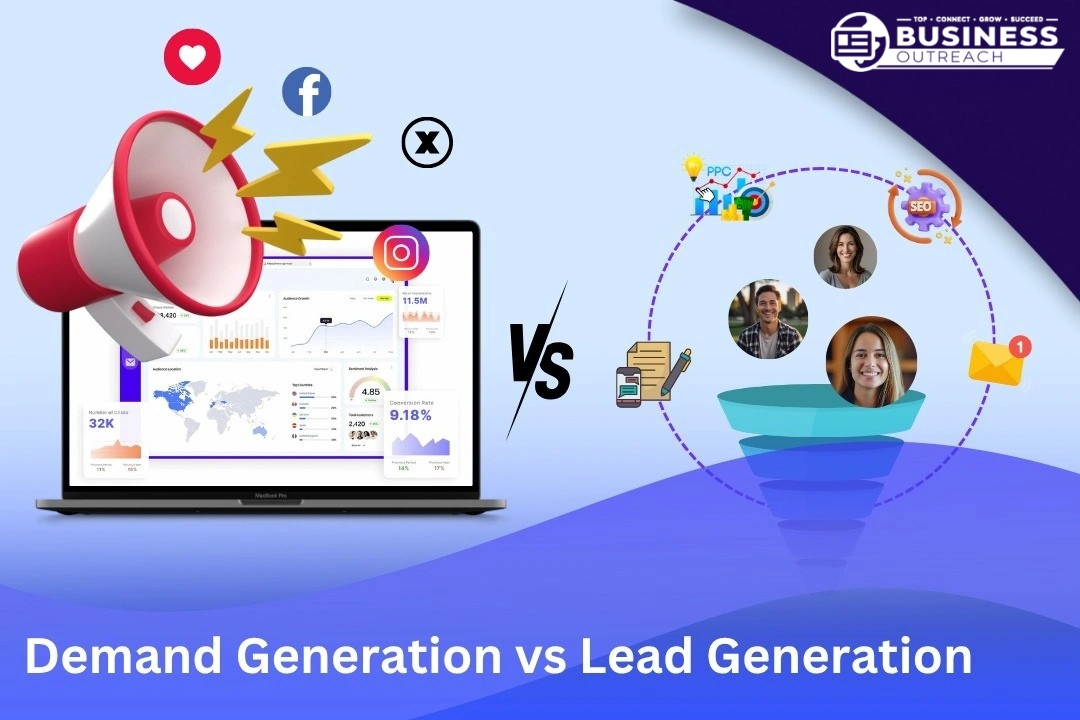
Demand Generation vs Lead Generation: Key Differences, Strategies, and Examples
Many businesses use the terms demand generation vs lead generation interchangeably. Both are important parts of marketing, but they solve different problems.
A company can collect thousands of leads and still struggle to create real sales opportunities. Another company can build strong market awareness but fail to capture interested buyers. The difference usually comes down to understanding when to create demand and when to capture existing interest.
For B2B companies, SaaS businesses, and growing brands, knowing how these strategies work together can help create a healthier marketing funnel.
Demand generation focuses on creating awareness, interest, and trust around a product or solution before someone is ready to buy. Lead generation focuses on identifying interested people by collecting their information and turning them into potential sales opportunities. Demand generation creates future demand, while lead generation captures current interest.
What Is Demand Generation?
Demand generation is the process of creating awareness and interest in a company’s product, service, or solution. The goal is not always to get immediate conversions. Instead, it helps potential buyers understand a problem and recognize that solutions exist.
A strong demand-generation strategy focuses on educating the audience. It answers questions, shares useful insights, and builds credibility before a buyer enters the sales process.
For example, imagine a US-based cybersecurity software company targeting small businesses. Instead of immediately asking visitors to request a demo, the company may publish guides about protecting customer data, host security webinars, and share research about common cyber risks.
Over time, business owners become familiar with the brand. When they eventually need cybersecurity software, that company is already trusted.
In my experience, many marketing teams rush into lead capture because forms and downloads are easy to measure. However, awareness often comes before action. Without creating demand, businesses may only reach people who are already searching for a solution.
Common demand generation activities include:
- Educational blog content
- Search engine optimization (SEO)
- Social media thought leadership
- Industry reports
- Webinars
- Podcasts
- Community engagement
- Brand campaigns
The main goal is to make the market aware, interested, and more likely to consider a solution later.
What Is Lead Generation?
Lead generation is the process of attracting people who have shown interest and collecting information that enables a business to continue communicating with them. Unlike demand generation, which focuses heavily on awareness, lead generation strategy focuses on turning interest into identifiable prospects.
A lead usually provides information such as:
- Name
- Email address
- Company details
- Business needs
- Contact preferences
This information helps marketing and sales teams understand who may become a potential customer. For example, a UK-based accounting software company may offer a free tax planning checklist. A visitor downloads the checklist and provides an email address. That person becomes a marketing lead because the company now has a way to continue the conversation.
Common lead generation methods include:
- Website forms
- Free trials
- Demo requests
- Newsletter subscriptions
- Downloadable resources
- Webinar registrations
- Consultation requests
I’ve seen companies generate large volumes of leads but struggle with results because they focus only on quantity. A list of 10,000 contacts does not always create better outcomes than a smaller group of highly interested prospects. Lead quality, timing, and relevance matter just as much as lead numbers.
Difference Between Demand Generation and Lead Generation
The main difference between demand generation and lead generation is their purpose.
Demand generation creates interest before a buyer is ready. Lead generation captures information after interest already exists.
| Factor | Demand Generation | Lead Generation |
| Main goal | Build awareness and interest | Capture potential customers |
| Primary focus | Creating market demand | Identifying prospects |
| Funnel stage | Awareness stage | Consideration and decision stages |
| Time frame | Usually long-term | Often short to medium-term |
| Buyer relationship | Builds trust | Starts direct communication |
| Common channels | SEO, content, social media, webinars | Forms, landing pages, email campaigns |
| Key metrics | Brand searches, engagement, audience growth | Leads, conversion rates, sales opportunities |
Neither approach replaces the other. They support different stages of the buyer journey.
A business that only focuses on lead generation may collect contacts but struggle to build trust. A business that focuses solely on demand generation may raise awareness but miss opportunities to connect with interested buyers.
Demand Generation Strategy: How Businesses Create Market Interest
A successful demand generation strategy helps people understand a problem before they actively look for a solution. The approach is especially useful for B2B companies with longer sales cycles because buyers often need education before making a decision.
Content Marketing
Content marketing is one of the most common demand generation methods. Businesses create useful resources that answer customer questions and solve problems.
Examples include:
- Blog articles
- Research reports
- Industry guides
- Case studies
- Educational videos
For example, a project management software company might publish content about improving remote team productivity. The company is not immediately selling software. It is helping managers understand a challenge. That education builds familiarity and trust.
Social Media and Thought Leadership
Social platforms allow companies to share knowledge and participate in industry conversations. LinkedIn is especially common for B2B demand generation because professionals often use it to learn about business trends, tools, and solutions.
A SaaS founder might regularly share lessons about customer support challenges, product growth, or team management. These posts can create awareness among potential buyers before they need the software.
Webinars and Educational Campaigns
Webinars allow businesses to teach audiences while building relationships.
For example, a UK marketing technology company may host a webinar about improving customer acquisition strategies. Attendees may not buy immediately, but they become more familiar with the company. This creates future opportunities.
Lead Generation Strategy: How Businesses Capture Potential Customers
A lead generation strategy converts existing interest into measurable opportunities. Once someone understands their problem and starts looking for solutions, lead generation helps businesses connect with them directly. Many B2B lead generation companies follow this approach to identify qualified prospects, nurture relationships, and deliver high-intent leads to sales teams, making the overall conversion process more effective.
Landing Pages and Forms
Landing pages are designed to encourage a specific action.
Examples:
- Downloading an ebook
- Booking a consultation
- Requesting a product demonstration
- Signing up for a free resource
A visitor who completes the form becomes a known contact.
Email Marketing Campaigns
Email helps businesses nurture relationships after capturing a lead.
A company may send:
- Educational emails
- Product updates
- Industry insights
- Helpful resources
The goal is to provide value while guiding interested prospects toward the next step.
Paid Campaigns and Retargeting
Paid advertising can help businesses reach people who are already showing interest.
For example, a software company may search ads targeting users looking for customer relationship management solutions. Those visitors may already have buying intent, making lead capture more effective.
Demand Generation vs Lead Generation Examples
Understanding real examples makes the difference clearer.
Example 1: SaaS Company Building Demand
A customer support software company publishes articles about reducing response times, improving customer satisfaction, and managing support teams.
The content attracts managers who may not need software today but become familiar with the brand. This is demand generation.
Example 2: Consulting Company Capturing Leads
A business consulting firm creates a free business growth assessment. Visitors enter their email address to receive personalized recommendations.
The company now has potential prospects to follow up with.
This is lead generation.
Example 3: Manufacturing Company Using Educational Content
A manufacturing supplier publishes an annual industry report about supply chain challenges. Decision-makers download and share the report. Some later contact the company for solutions.
The report creates demand, while downloads create leads.
Example 4: B2B Software Webinar Campaign
A UK-based HR software company hosts a webinar about improving employee management. The webinar attracts interested professionals. Registration information allows the company to identify potential customers. The campaign combines both approaches.
How Demand Generation and Lead Generation Work Together
Demand generation and lead generation work best as connected processes. Demand generation attracts attention and builds trust. Lead generation captures the people who are interested enough to take action.
A simple journey may look like this:
- A buyer discovers educational content.
- They learn about a business problem.
- They engage with the company.
- They download a resource or request information.
- They become a qualified lead.
For example, a US HR software company may first publish workplace management guides. Months later, a visitor downloads a free employee survey template. That person becomes a lead because prior demand-generation activities have created trust.
One mistake I keep seeing is companies treating these strategies as separate departments. Marketing works better when awareness-building and lead capture support each other.
Demand Generation vs Lead Generation Metrics
Because both strategies have different goals, they also require different measurements.
Demand Generation Metrics
Common measurements include:
- Website traffic growth
- Brand searches
- Social engagement
- Content performance
- Audience growth
- Organic visibility
These indicators show whether more people are becoming aware of the company.
Lead Generation Metrics
Common measurements include:
- Number of leads
- Conversion rate
- Cost per lead
- Marketing qualified leads
- Sales opportunities
These measurements indicate whether interest is translating into potential revenue.
A balanced marketing team usually tracks both awareness and conversion.
Common Mistakes Businesses Make
Many companies struggle because they use the wrong approach at the wrong stage.
Focusing Only on Lead Forms
Collecting contact details is useful, but people may not trust a company they have never heard of.
Expecting Immediate Results From Demand Generation
Demand creation often takes time because trust develops gradually.
Measuring Only Lead Quantity
More leads do not always mean better opportunities.
Creating Content Without Strategy
Publishing random content may not create meaningful demand. Content should connect with customer problems.
Frequently Asked Questions
Is demand generation better than lead generation?
Neither strategy is better because they serve different purposes. Demand generation builds awareness, while lead generation captures interested prospects.
Can demand generation create leads?
Yes, demand generation can generate leads by building trust and encouraging interested people to take actions such as downloading, registering, or inquiring.
What comes first, demand generation or lead generation?
Demand generation usually comes first because businesses often need to create awareness before people are ready to share their information.
What is the difference between demand generation and inbound marketing?
Demand generation focuses on creating interest in a market, while inbound marketing uses helpful content and experiences to attract and convert visitors.
Final Thoughts
Demand generation and lead generation are not competing strategies. They work together to move people through the buying journey. Demand generation helps businesses become known and trusted. Lead generation helps identify people who are interested enough to continue the conversation. For companies selling complex products or services, especially in B2B markets, combining both approaches can create a stronger marketing foundation. Building awareness first and capturing interest later often leads to better-quality opportunities.